International trade involves much more than moving goods from one country to another. Freight forwarding services help businesses plan and coordinate the movement of cargo from origin to destination, including transportation booking, documentation, customs coordination, cargo handling, tracking, and delivery.
For importers, exporters, manufacturers, retailers, and businesses expanding into international markets, freight forwarding can simplify a process involving multiple carriers, transport modes, ports, airports, warehouses, trade documents, and regulatory requirements.
But what exactly does a freight forwarder do? How does international freight forwarding work? What documents are required? And how should a business choose a freight forwarding company?
This complete guide answers these questions and explains how freight forwarding supports international shipping.
What Is Freight Forwarding?
Freight forwarding is the coordination of cargo movement from an origin point to a destination, often across international borders.
A freight forwarder may coordinate:
- Shipment planning and booking
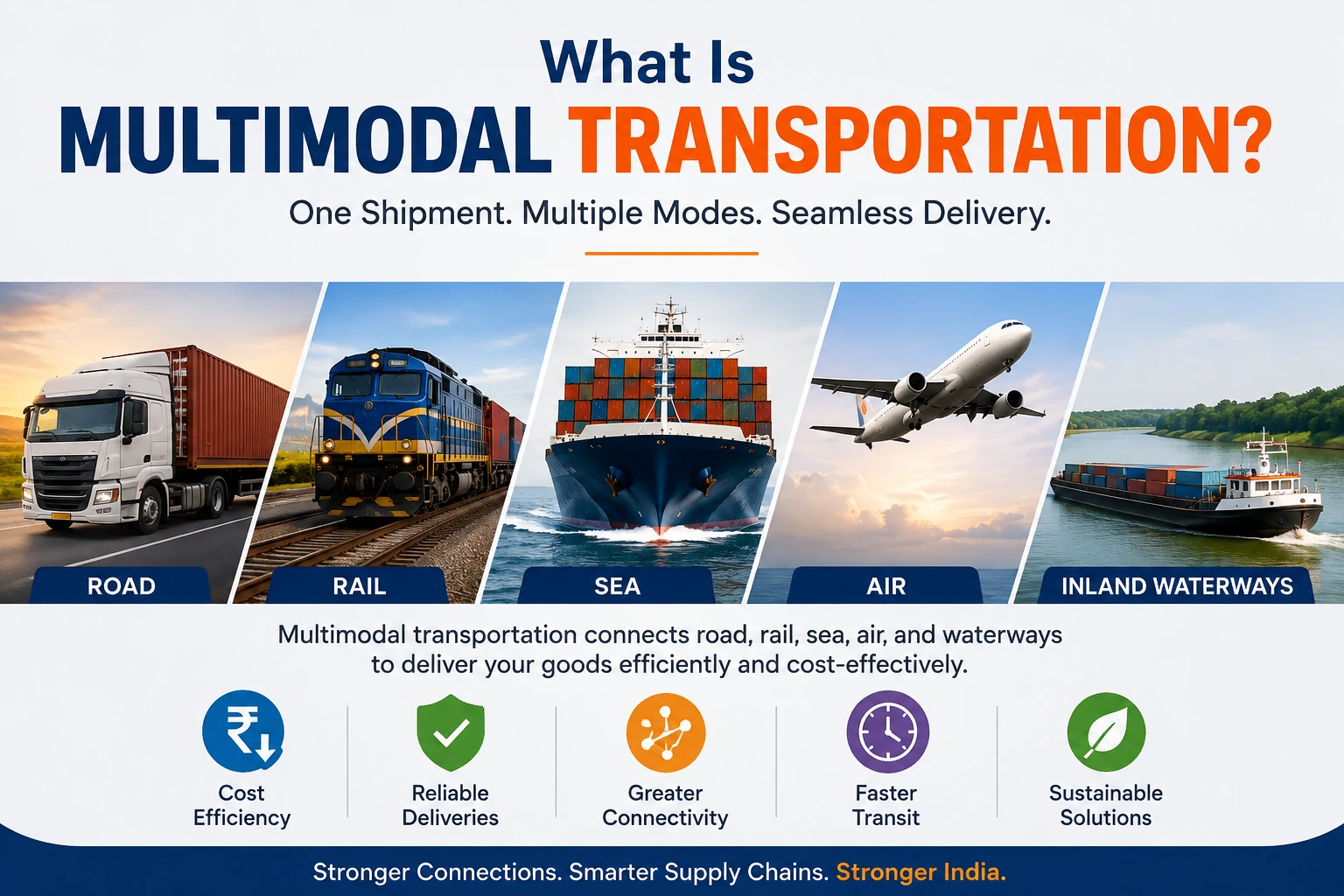
- Air, sea, road, or rail transportation
- Cargo pickup and handling
- Shipping documentation
- Import and export coordination
- Customs clearance support
- Cargo consolidation
- Carrier and logistics partner coordination
- Shipment tracking
- Final delivery arrangements
In simple terms, a freight forwarder acts as a logistics coordinator between the shipper, carriers, customs authorities, ports, warehouses, transport providers, and other parties involved in moving cargo.
What Are Freight Forwarding Services?
Freight forwarding services are logistics solutions that coordinate the movement of goods between locations, particularly when shipments cross domestic or international borders.
A freight forwarder does not necessarily operate every truck, vessel, aircraft, or warehouse involved in a shipment. Instead, the forwarder coordinates different logistics activities and service providers to move cargo according to the shipment’s requirements.
For example, an exporter in India shipping goods to Europe may need to coordinate:
- Cargo pickup
- Export documentation
- Port or airport movement
- Carrier booking
- International transportation
- Customs-related procedures
- Destination handling
- Import clearance
- Inland transportation
- Final delivery
Managing these activities independently can create communication gaps and operational complexity. A freight forwarding company helps bring these activities into a coordinated shipping process.
Bismarck World provides freight forwarding services in Mumbai covering air freight, sea freight, road transportation, rail logistics, cargo booking, shipment documentation, freight consolidation, shipment coordination, and cargo tracking.
How Does International Freight Forwarding Work?
The international freight forwarding process generally begins with understanding the shipment requirements and ends when the cargo reaches its destination.
The exact workflow depends on the cargo, origin, destination, transportation mode, shipment volume, timeline, and applicable trade requirements. However, the process commonly includes the following stages.
1. Shipment Planning
The first step is understanding the shipment.
A freight forwarder may need information such as:
- Origin and destination
- Cargo type
- Cargo dimensions and weight
- Shipment volume
- Required delivery timeline
- Preferred transportation mode
- Packaging requirements
- Import or export requirements
This information helps establish an appropriate logistics plan.
2. Freight Booking
Once the shipment requirements are established, the forwarder coordinates with relevant carriers and logistics partners.
Depending on the shipment, this may involve:
- Shipping lines
- Airlines
- Road transport providers
- Rail operators
- Multimodal logistics partners
The objective is to coordinate transportation according to the cargo and delivery requirements.
3. Cargo Pickup and Handling
Cargo is collected from the supplier, manufacturer, warehouse, or designated origin point.
Proper handling is important because incorrect documentation, packaging, labeling, or cargo information can create operational problems later in the shipping process.
4. Documentation
International shipments require accurate documentation.
Common documents may include:
- Commercial invoice
- Packing list
- Bill of lading
- Airway bill
- Certificate of origin
- Export documentation
- Import documentation
- Customs-related documents
The exact documents required depend on the shipment, commodity, origin, destination, and applicable regulations.
5. Export Customs Procedures
International shipments may need to complete export customs formalities before leaving the origin country.
Shipment details and documentation need to correspond with applicable customs requirements.
Errors or missing information can contribute to processing delays, making documentation accuracy an important part of freight forwarding.
6. International Transportation
After the required origin procedures are completed, cargo moves through the selected transportation network.
The primary international transportation modes are:
- Sea freight
- Air freight
Road and rail transportation can also form part of first-mile, inland, or multimodal transportation.
7. Destination Handling and Import Clearance
Once cargo reaches the destination country, it may require customs clearance and other destination procedures before continuing toward final delivery.
The freight forwarder coordinates relevant parties and logistics activities according to the shipment requirements.
8. Final Delivery
After destination requirements are completed, cargo can move to its final destination.
This may involve:
- Port-to-warehouse transportation
- Airport-to-warehouse movement
- Distribution center delivery
- Door-to-door transportation
- Inland road or rail transportation
The exact arrangement depends on the shipment and service scope.
What Does a Freight Forwarder Do?
A freight forwarder for international shipping acts as a coordinator between the business shipping the cargo and the different parties involved in transportation.
The role can include several important activities.
Transportation Coordination
The forwarder coordinates transportation according to cargo requirements, destination, timeline, and selected shipping mode.
Documentation Coordination
International freight forwarding involves substantial documentation. A forwarder helps coordinate the required shipping documents and information.
Carrier Coordination
The forwarder works with relevant shipping lines, airlines, transport providers, and logistics partners.
Cargo Consolidation
Where appropriate, shipments can be consolidated to improve transportation efficiency. Consolidation may involve combining compatible cargo into a shared shipment.
Shipment Tracking
Tracking systems and shipment updates can provide visibility into cargo movement and help businesses monitor logistics operations.
Customs Coordination
Freight forwarding often works closely with customs processes. Depending on the provider and service arrangement, customs clearance can be integrated into the broader logistics workflow.
Delivery Coordination
A forwarder can coordinate inland transportation and delivery after international cargo reaches its destination.
This is why freight forwarding is more than simply booking transportation. It involves coordinating multiple activities that collectively move cargo through an international supply chain.
Air Freight Forwarding Services vs Sea Freight Forwarding Services
Choosing between air freight forwarding services and sea freight forwarding services depends on several factors.
There is no single transportation mode that is appropriate for every shipment.
Air Freight Forwarding
Air freight is commonly considered when speed is an important requirement.
It can be suitable for:
- Time-sensitive shipments
- High-value cargo
- Smaller shipments
- Certain perishable goods
- Urgent replenishment requirements
Air transportation generally offers faster transit than ocean transportation. However, the overall shipment timeline can also depend on cargo handling, documentation, customs procedures, and inland transportation.
Sea Freight Forwarding
Sea freight is commonly used for larger or heavier international shipments.
It can be suitable for:
- Containerized cargo
- Large shipment volumes
- FCL shipments
- LCL shipments
- Businesses planning around longer transit windows
For many international supply chains, ocean transportation forms an important part of global cargo movement.
Air Freight vs Sea Freight: What Should You Consider?
|
Factor |
Air Freight | Sea Freight |
|
Transit speed |
Generally faster |
Generally slower |
|
Shipment size |
Often suitable for smaller or urgent cargo |
Suitable for larger volumes |
|
Cargo volume |
More limited than vessel capacity |
High |
|
Urgency |
Suitable for time-sensitive shipments | Commonly used for planned shipments |
| Planning focus | Speed and delivery requirements |
Volume, route and delivery planning |
The appropriate option depends on cargo characteristics, delivery requirements, destination, shipment volume, and logistics planning.
What Documents Are Required for International Freight Forwarding?
Documentation is one of the most important parts of international cargo movement.
Depending on the shipment, common documents include:
Commercial Invoice
A commercial invoice provides information about the commercial transaction, including details about the goods, value, seller, and buyer.
Packing List
A packing list provides information about shipment packaging, quantity, dimensions, and contents.
Bill of Lading
A bill of lading is used for ocean transportation and contains important shipment and carrier information.
Airway Bill
An airway bill is used for air cargo transportation and provides information about the shipment and air carrier.
Certificate of Origin
A certificate of origin identifies the country where goods originate when required for the relevant trade transaction.
Customs Documentation
Import and export shipments may require additional documents depending on the commodity, destination, applicable regulations, and customs procedures.
Accurate documentation can help reduce avoidable operational issues and support smoother customs and transportation coordination.
What Is Import Export Freight Forwarding?
Import export freight forwarding refers to freight forwarding activities associated with the movement of goods into and out of a country.
For exporters, the process generally involves preparing cargo for international movement, coordinating export procedures, arranging transportation, and managing destination logistics.
For importers, the process involves coordinating the arrival of cargo, destination procedures, customs clearance, inland transportation, and final delivery.
Businesses involved in regular international trade often benefit from having a coordinated logistics process rather than managing every transportation and documentation requirement independently.
Freight Forwarding Company vs Shipping Carrier: What’s the Difference?
These terms are sometimes used interchangeably, but they serve different functions.
A shipping carrier physically transports cargo using its vessel, aircraft, truck, or rail network.
A freight forwarding company, on the other hand, coordinates transportation and related logistics activities on behalf of the shipper.
A freight forwarder may work with multiple carriers and logistics providers depending on the shipment.
In simple terms:
Carrier = transports the cargo
Freight forwarder = coordinates the logistics around moving the cargo
A business may therefore work with a freight forwarder that coordinates the carrier, documentation, cargo movement, and other logistics activities required for an international shipment.
How to Choose a Freight Forwarding Company
Choosing a logistics partner requires more than comparing freight rates.
If you are researching how to choose a freight forwarding company, consider these factors.
1. Transportation Capabilities
Check whether the provider supports the transportation modes your business needs, such as:
- Air freight
- Sea freight
- Road transportation
- Rail transportation
- Multimodal logistics
2. International Network
International shipments require coordination across different countries and logistics networks.
Look for a provider with relevant international shipping partners and experience handling your intended trade routes.
3. Documentation Expertise
Ask how the provider manages shipment documentation and communication around customs procedures.
4. Shipment Visibility
Cargo tracking and regular shipment updates can make international logistics easier to monitor.
5. Customs Support
Customs is a major part of cross-border shipping. Determine whether the logistics provider offers customs coordination or works with customs specialists as part of its service structure.
6. Industry Experience
Different industries can have different transportation and compliance requirements.
Bismarck World states that it supports industries including manufacturing, automotive, pharmaceuticals, retail, chemicals, and FMCG.
7. End-to-End Capabilities
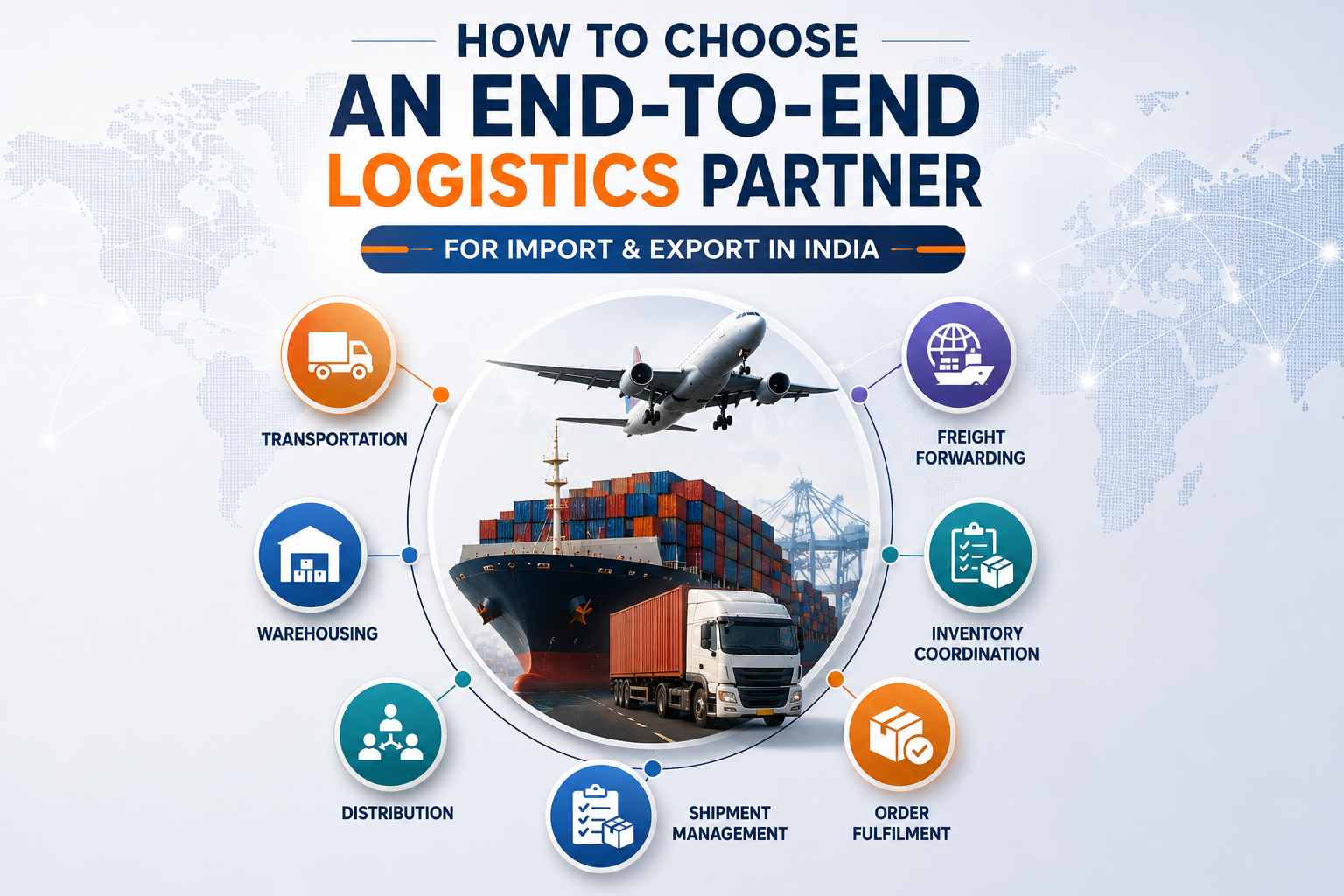
Businesses with complex supply chains may prefer end-to-end freight forwarding services that connect transportation, documentation, customs, cargo handling, tracking, and delivery within a coordinated workflow.
Why Mumbai Is Important for Freight Forwarding
Mumbai is a major commercial and logistics hub in India, connecting businesses with maritime, airport, road, and rail networks.
For businesses operating through Mumbai, freight forwarding can involve coordination through gateways such as:
- JNPT
- Mumbai Port
- Chhatrapati Shivaji Maharaj International Airport
For businesses searching for a freight forwarding company in Mumbai or a freight forwarder in Mumbai, understanding the provider’s access to relevant trade gateways and transportation networks is an important consideration.
Freight Forwarding Services in India: What Businesses Should Expect
Businesses searching for freight forwarding services in India should evaluate whether a provider can support their complete logistics requirements.
Depending on the provider, services can include:
- International freight forwarding
- Air freight
- Sea freight
- Road transportation
- Rail logistics
- Cargo consolidation
- Documentation coordination
- Customs clearance support
- Cargo tracking
- Multimodal transportation
- Inland transportation
- Door-to-door delivery
Bismarck World’s published freight forwarding offering includes air, sea, road, and rail transportation, along with cargo booking, documentation, consolidation, shipment coordination, and tracking.
International Cargo Shipping: What Can Cause Delays?
International cargo shipping involves multiple parties, so delays can occur for different operational reasons.
Documentation Errors
Incorrect or incomplete shipment information can result in additional checks or processing requirements.
Customs Issues
Incorrect classification, documentation gaps, or applicable regulatory requirements can affect cargo clearance.
Carrier Schedule Changes
Vessel and flight schedules can change because of operational or external factors.
Port or Airport Congestion
High cargo volumes can affect handling and processing times.
Incorrect Shipment Planning
Selecting a transportation option without considering cargo characteristics, urgency, volume, or destination requirements can create avoidable complications.
Poor Communication
When shippers, carriers, customs teams, warehouses, and transport providers do not have coordinated information, resolving exceptions can become more difficult.
A capable logistics partner can help businesses identify requirements early and coordinate the different parties involved.
How Freight Forwarding Supports Supply Chain Efficiency
Freight forwarding is closely connected to broader logistics and freight forwarding operations.
A shipment does not exist in isolation. It is part of a wider supply chain involving suppliers, manufacturers, warehouses, ports, carriers, customs authorities, distributors, and customers.
Effective freight coordination can help businesses:
- Improve shipment visibility
- Coordinate different transportation modes
- Reduce communication gaps
- Organize international shipping documentation
- Plan cargo movement
- Coordinate customs-related processes
- Connect international transportation with inland delivery
For businesses handling regular imports and exports, this coordination can become an important part of supply chain management.
When Should a Business Use a Freight Forwarding Agent?
A freight forwarding agent can be particularly useful when a business:
- Ships internationally
- Imports goods from multiple countries
- Exports products regularly
- Uses different transportation modes
- Needs help coordinating shipping documents
- Requires cargo tracking
- Has complex logistics requirements
- Wants a single logistics coordination point
Small and medium-sized businesses may find freight forwarding useful when they do not have an internal logistics team with the resources to coordinate international shipments independently.
Larger businesses can also use freight forwarders to support specific trade lanes, shipment types, destinations, or logistics requirements.
How Global Freight Forwarding Services Connect International Trade
Global freight forwarding services connect different parts of an international supply chain.
Consider a manufacturer in India exporting finished goods to another country.
The shipment may involve:
Manufacturer → Inland Transport → Port → Ocean Carrier → Destination Port → Customs → Inland Transport → Customer
At every stage, information, documentation, timing, and cargo handling need to align.
Freight forwarders help coordinate these moving parts by working with carriers, transport providers, customs teams, warehouses, and other logistics partners.
This coordination becomes increasingly important when shipments involve multiple countries or transportation modes.
What Should You Ask a Freight Forwarder Before Booking?
Before selecting a freight forwarding company for import export, ask questions that clarify the service, coverage, and commercial terms.
Consider asking:
- Which transportation modes do you support?
- Do you handle both import and export shipments?
- Which countries and trade routes do you cover?
- Do you provide cargo tracking?
- What documents are required for my shipment?
- How is customs clearance coordinated?
- Do you support FCL and LCL shipments?
- Can you arrange inland transportation?
- Do you provide door-to-door logistics?
- What charges are included in the quotation?
- How are shipment exceptions communicated?
- Can you support increasing shipment volumes?
The objective is not simply to find a freight rate. It is to understand whether the logistics provider can manage the operational requirements of your shipment.
Freight Forwarding Services for Importers and Exporters
Freight forwarding services for importers and exporters can simplify international logistics by connecting transportation, documentation, customs coordination, and delivery.
For exporters, the focus may be on moving goods out of the country efficiently and ensuring the shipment is prepared for international transportation.
For importers, the process extends from international transportation to destination clearance and final delivery.
In both cases, the freight forwarder’s role is to coordinate the shipment and help businesses navigate the operational complexity of international trade.
The Future of Freight Forwarding
Freight forwarding is becoming increasingly dependent on visibility, coordination, technology, and integrated logistics.
Businesses need more than cargo movement. They also need information about where shipments are, what stage they have reached, what documents are pending, and whether potential disruptions could affect delivery.
Technologies such as shipment tracking, digital documentation, logistics management systems, and data-driven planning are becoming increasingly relevant to international logistics.
However, technology does not eliminate the importance of logistics expertise. International trade still requires knowledge of transportation, documentation, customs processes, cargo handling, and supply chain coordination.
The combination of technology and operational expertise can help businesses build more visible and coordinated logistics processes.
Why Bismarck World for Freight Forwarding?
Bismarck World provides freight forwarding and integrated logistics services in Mumbai for businesses involved in domestic and international cargo movement.
Its published freight forwarding services cover air freight, sea freight, road transportation, rail logistics, cargo booking, shipment documentation, freight consolidation, shipment coordination, and cargo tracking. The company also supports customs clearance, EXIM logistics, multimodal transportation, and related supply chain services.
For businesses managing international shipments, an integrated logistics approach can bring multiple transportation and coordination requirements into one framework.
To discuss your shipment requirements, contact the Bismarck World team.
Conclusion
International shipping is a chain of interconnected activities—not simply a journey from one port to another.
From shipment planning and carrier booking to documentation, customs coordination, international transportation, tracking, and final delivery, every stage contributes to the movement of international cargo.
The right freight forwarding services can help businesses coordinate these activities and maintain better visibility across their supply chains.
For importers, exporters, manufacturers, retailers, and businesses involved in global trade, selecting a freight forwarding partner should therefore involve more than comparing freight rates. Transportation capabilities, international networks, documentation expertise, customs coordination, shipment visibility, and end-to-end logistics capabilities are all relevant considerations.
When these logistics activities are properly coordinated, international cargo movement becomes easier to manage and businesses can focus on serving customers and expanding into new markets.
Key Takeaways
- Freight forwarding coordinates the movement of goods from origin to destination.
- Freight forwarders can coordinate air, sea, road, rail, and multimodal transportation.
- Documentation and customs coordination are important parts of international shipping.
- Air freight generally focuses on speed, while sea freight is commonly used for larger shipment volumes.
- Businesses should evaluate transportation capabilities, international networks, documentation expertise, tracking, customs support, and service coverage before choosing a freight forwarder.
- End-to-end freight forwarding can connect transportation, documentation, customs, tracking, and delivery within one coordinated logistics process.
Frequently Asked Questions About Freight Forwarding
- What is freight forwarding?
Freight forwarding is the coordination of cargo transportation from origin to destination. It can include transportation booking, documentation, customs coordination, cargo handling, tracking, and delivery arrangements. - What does an international freight forwarding company do?
An international freight forwarding company coordinates the movement of cargo across international borders. Its responsibilities can include carrier coordination, documentation, customs processes, transportation, cargo tracking, and final delivery arrangements. - What is the difference between a freight forwarder and a carrier?
A carrier physically transports cargo, while a freight forwarder coordinates transportation and related logistics activities between the shipper, carrier, customs authorities, and other service providers. - What are the main types of freight forwarding?
The main transportation modes used in freight forwarding include air freight, sea freight, road freight, and rail freight. Multimodal shipments can combine two or more transportation modes. - Is air freight better than sea freight?
Neither option is universally suitable for every shipment. Air freight generally prioritizes speed, while sea freight is commonly used for larger volumes and planned international shipments. The appropriate choice depends on cargo, volume, destination, urgency, and logistics requirements. - What services are included in freight forwarding?
Depending on the provider, freight forwarding can include shipment planning, cargo booking, transportation, documentation, consolidation, customs coordination, shipment tracking, and delivery arrangements. - How do I choose a freight forwarding company?
Evaluate the provider’s transportation capabilities, international network, documentation expertise, customs support, shipment visibility, industry experience, service coverage, communication, and pricing transparency. - Can freight forwarders handle both imports and exports?
Yes. Freight forwarders can coordinate both import and export shipments, although the exact services available depend on the provider and shipment requirements.