The freight forwarding process in India is the coordinated movement of goods from supplier to final destination. It covers shipment planning, freight booking, cargo pickup, documentation, customs clearance, international transportation and final delivery, usually managed by a freight forwarder acting as a single coordination point.
For importers and exporters, moving goods across borders involves much more than arranging transportation. A typical shipment can involve carriers, transporters, ports, customs authorities, warehouses, freight terminals and delivery partners.
Managing all of this independently is time-consuming and complicated. A freight forwarder coordinates the stages of the shipment and helps businesses manage transportation, documentation and logistics requirements more efficiently.
This guide explains how freight forwarding works in India, the steps involved, the documents commonly required, the factors that affect freight forwarding cost, and how to choose the right logistics partner.
What Is Freight Forwarding?
Freight forwarding is the coordination of transporting goods from one location to another, particularly when cargo crosses domestic or international borders.
A freight forwarder doesn’t necessarily own the aircraft, vessel, truck or train used to move the cargo. It coordinates with carriers and logistics providers to arrange the movement of goods.
Depending on the service, a freight forwarder may coordinate:
- Transportation planning
- Freight booking
- Cargo pickup
- Shipping documentation
- Customs-related activities
- Cargo consolidation
- Warehousing
- Shipment tracking
- Inland transportation
- Final delivery
In simple terms, a freight forwarder connects the different stages of the supply chain so cargo can move from origin to destination.
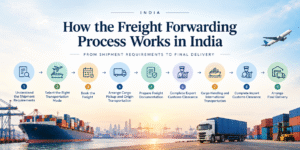
How the Freight Forwarding Process Works in India
1. Understand the Shipment Requirements
The first step is to understand the shipment before deciding how to transport it. A forwarder generally needs:
- Type of goods
- Number of packages
- Weight and dimensions
- Cargo value
- Origin and destination
- Required delivery timeline
- Preferred transportation mode
- Special handling requirements
The nature of the cargo affects the transport method, documentation and handling. Fragile, temperature-sensitive or regulated goods need more planning than standard commercial cargo. Once these details are set, the forwarder can evaluate suitable options.
2. Select the Right Transportation Mode
For international shipments, the main options are air freight and sea freight.
Air freight is considered when speed matters. It may suit:
- Time-sensitive shipments
- High-value goods
- Smaller consignments
- Products needing faster international movement
It has a different cost structure from ocean transport, so weigh urgency against overall logistics cost.
Sea freight is widely used for larger international shipments and can be arranged as:
- FCL (Full Container Load): a full container is allocated to one shipment
- LCL (Less than Container Load): cargo from multiple shippers is consolidated in one container
The choice between FCL and LCL depends on cargo volume, destination, timing and shipment requirements.
3. Book the Freight
Once the mode is selected, the forwarder arranges cargo space with the carrier: a shipping line for sea freight, or an airline or air cargo provider for air freight.
Booking takes into account:
- Vessel or flight schedules
- Cargo availability
- Container requirements
- Origin port or airport
- Destination
- Cargo cut-off dates
- Cargo specifications
Proper booking coordination keeps the shipment aligned with the planned sailing or flight.
4. Arrange Cargo Pickup and Origin Transportation
After booking is confirmed, cargo moves from the supplier’s premises to the designated logistics facility, port or airport. This commonly involves road transportation, though rail transportation or multimodal options may also be used, often coordinated through EXIM transport services.
For example, goods manufactured outside Mumbai may first travel by road to a logistics facility or port before their international journey begins. Origin transportation may involve:
- Trucks
- Containers
- Warehouses
- Container Freight Stations
- Rail transportation
- Multimodal transportation
For businesses shipping through Mumbai, coordination with JNPT (Nhava Sheva) and Mumbai’s air cargo infrastructure is an important part of this stage.
5. Prepare Freight Documentation
Documentation is one of the most important parts of international freight forwarding. Every shipment needs accurate information about the goods, shipper, consignee, quantity, value and transport details. Key documents include the Commercial Invoice, Packing List, Bill of Lading or Air Waybill, Shipping Bill, Bill of Entry and IEC (the full list is in the documents section below).
The exact documents depend on the goods, destination and applicable regulations. Incorrect or inconsistent information can lead to extra checks, clarification requests or delays, so make sure details match across your commercial, shipping and customs documents.
6. Complete Export Customs Clearance
Before exported goods leave India, the applicable export customs procedures must be completed. Filings are made electronically on ICEGATE, India’s customs EDI platform. Depending on the shipment, this may involve:
- Filing the Shipping Bill
- Verification of documents and cargo details
- Customs assessment
- Cargo examination, where applicable
- Let Export Order (LEO), which authorises the cargo to be handed to the carrier
The exact process depends on the commodity, destination and regulations. A freight forwarder can coordinate with logistics and customs stakeholders to prepare the shipment, and a licensed customs broker usually handles the filing. For a detailed walkthrough, read our guide to the export clearance process in Mumbai.
7. Cargo Handling and International Transportation
After export procedures are complete, cargo moves into the international leg. Depending on the shipment, goods may travel by sea, air, rail, road or a combination.
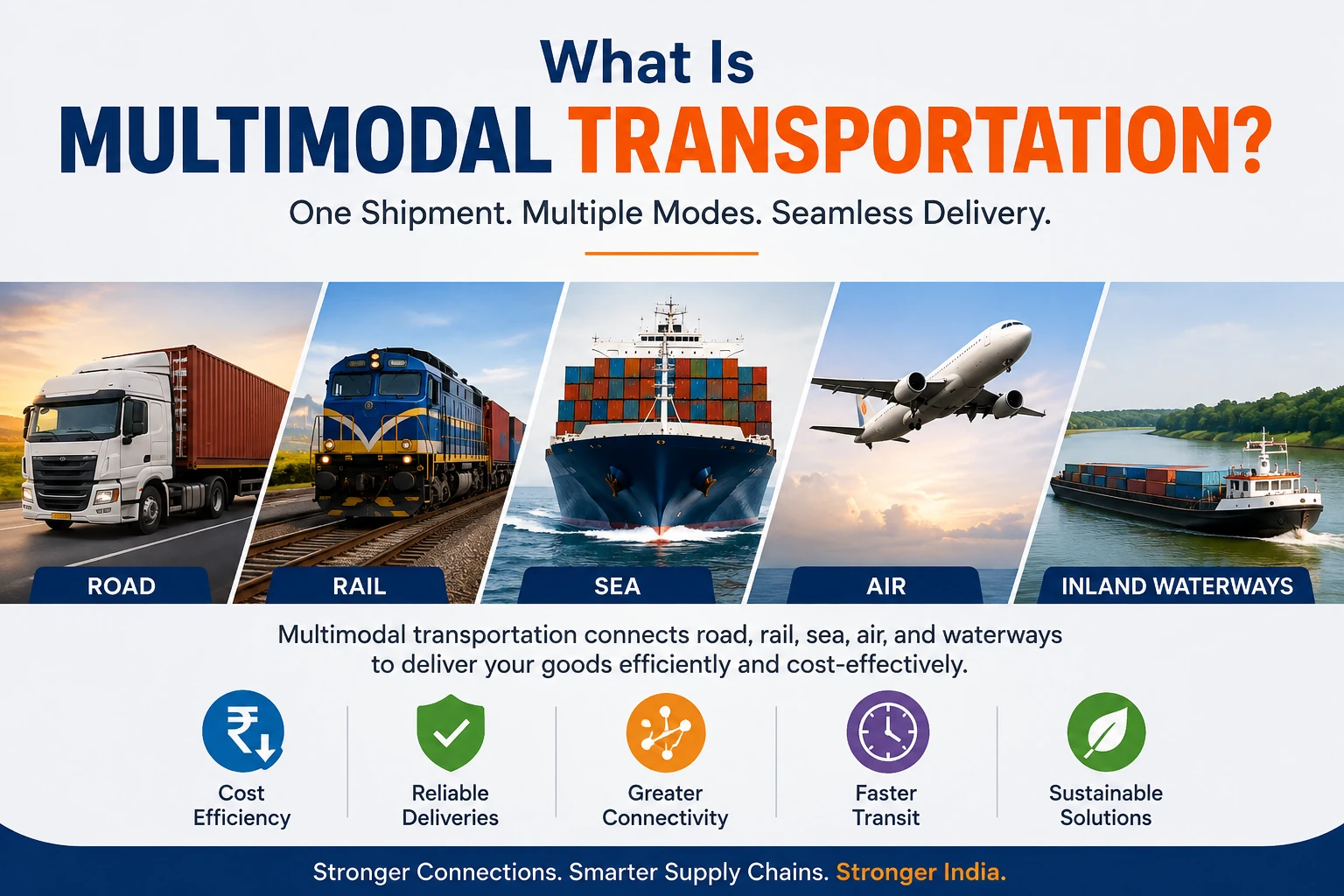
For example, an export shipment from Mumbai could move by road from the supplier to JNPT, travel by sea to the destination country and continue by road to the consignee. When several modes are combined in one logistics journey, it is called multimodal transportation.
Shipment tracking and communication matter at this stage. Businesses need visibility into cargo movement to plan inventory, production and delivery.
8. Complete Import Customs Clearance
When the shipment reaches its destination, it must complete the applicable import procedures before release. For shipments entering India, the importer or an authorised representative completes the customs requirements. This may involve:
- Filing the Bill of Entry
- Providing supporting documents
- Customs assessment
- Cargo examination, where applicable
- Payment of applicable duties and taxes
- Out-of-Charge (OOC) order and cargo release
Requirements vary by product category and regulations. Plan customs clearance as part of the overall freight forwarding process rather than treating it as a final step after the cargo has arrived.
9. Arrange Final Delivery
Once customs clearance and release are complete, the shipment moves to its final destination. Final delivery may involve:
- Port or airport pickup
- Road transportation
- Warehouse delivery
- Distribution
- Door-to-door delivery
The arrangement depends on the service selected. For businesses with multiple warehouses or delivery locations, freight forwarding can also form part of a broader supply chain and distribution strategy.
 What Documents Are Required for Freight Forwarding in India?
The documents required for freight forwarding vary by cargo, origin, destination and regulations. Commonly used documents include:
|
Document |
Purpose |
|
Commercial Invoice |
Provides information about the commercial transaction and goods |
|
Packing List |
Contains package, quantity and cargo details |
| Bill of Lading |
Transport document generally used for sea freight |
|
Air Waybill |
Transport document used for air freight |
| Shipping Bill |
Used for applicable export customs procedures |
| Bill of Entry |
Used for import customs clearance |
|
Certificate of Origin |
Establishes the origin of goods when required |
| Importer-Exporter Code (IEC) |
Identifies importers and exporters for applicable trade activities |
| Insurance Documents |
Evidence of cargo insurance where applicable |
Additional certificates, licences or permits may be required depending on the product category.
What Does a Freight Forwarder Do?
A freight forwarder coordinates the logistics activities involved in moving cargo from origin to destination. Instead of managing every carrier and provider independently, the importer or exporter has a central coordination point.
Depending on the service scope, a freight forwarder may:
- Plan shipments
- Arrange freight bookings
- Coordinate cargo pickup
- Assist with shipping documentation
- Coordinate customs-related activities
- Arrange cargo consolidation
- Coordinate inland transportation
- Provide shipment tracking
- Coordinate final delivery
Responsibilities vary between providers and depend on customer requirements. It’s also important to distinguish freight forwarding from customs broking: a forwarder can coordinate customs-related activities, while specific customs functions may be handled by the importer, the exporter or an authorised customs broker. If you need clearance handled directly, look for a provider with dedicated customs broking services.
What Factors Affect Freight Forwarding Costs?
There is no single fixed price. Freight forwarding cost depends on the shipment and logistics requirements:
- Cargo weight and dimensions: these influence transport cost and the type of service required.
- Transportation mode: air and sea freight have different pricing structures.
- FCL or LCL: shipment volume influences which is more suitable for ocean freight.
- Origin and destination: route, distance, carrier services and destination infrastructure affect freight cost.
- Customs and duties: duties, taxes, regulatory charges and documentation requirements add to total logistics cost.
- Port and handling charges: terminal handling, cargo handling, storage and related charges may apply.
- Inland transportation: moving cargo between supplier, port, airport, warehouse and final destination affects overall cost.
For this reason, evaluate the total logistics cost rather than comparing only the basic freight rate.
Why Is Mumbai Important for Freight Forwarding?
Mumbai is a major commercial and logistics centre for international trade. Its access to maritime and air cargo infrastructure makes it an important location for import and export activity.
Freight forwarding connected with Mumbai may involve:
- JNPT (Nhava Sheva)
- Mumbai Port
- Mumbai air cargo facilities
- Warehouses
- Container Freight Stations
- Inland transportation networks
For businesses in the region, choosing a freight forwarding company in Mumbai with knowledge of local logistics operations can simplify shipment coordination. Mumbai is also an important connection point for wider domestic and international supply chains.
How to Choose a Freight Forwarding Company in India
Choosing a freight forwarder should involve more than comparing quoted prices. Consider:
- Industry experience: look for experience relevant to your cargo type, trade routes and industry.
- Transportation capabilities: access to different options gives flexibility when requirements change.
- Documentation support: strong coordination reduces avoidable errors and delays.
- Customs coordination: the provider should understand the customs requirements for your shipments and work with authorised professionals where necessary.
- Shipment visibility: tracking and regular communication show where your cargo is in transit.
- Port and airport coverage: for Mumbai businesses, knowledge of JNPT (Nhava Sheva), Mumbai Port and relevant air cargo facilities is valuable.
- End-to-end logistics support: complex supply chains benefit from a partner that coordinates transportation, cargo handling, customs-related activities and final delivery.
Freight Forwarding vs Shipping: What Is the Difference?
Shipping refers primarily to the transportation of goods, while freight forwarding covers the broader coordination required to move those goods from origin to destination.
Shipping is the physical movement of cargo by vessel, aircraft or another mode. Freight forwarding can include transport arrangements, documentation, cargo handling, customs coordination, tracking and delivery planning.
Shipping moves the cargo; freight forwarding coordinates the logistics around moving it.
The exact responsibilities depend on the service agreement and the parties involved.
Frequently Asked Questions About Freight Forwarding
What is the freight forwarding process in India?
The freight forwarding process in India generally includes shipment planning, freight booking, cargo pickup, documentation, export customs clearance, international transportation, import customs clearance and final delivery.
How does freight forwarding work?
A freight forwarder coordinates carriers, transport providers, cargo handling, documentation, customs-related activities and delivery to move goods from origin to final destination.
What documents are needed for freight forwarding?
Common documents include the Commercial Invoice, Packing List, Bill of Lading or Air Waybill, Shipping Bill, Bill of Entry, IEC and other documents required for specific goods or destinations.
How long does freight forwarding take?
The timeline depends on the transportation mode, origin, destination, carrier schedule, customs procedures and cargo requirements. Air freight is generally faster than sea freight, but actual transit times vary by shipment.
What is FCL and LCL?
FCL means Full Container Load, where a shipment uses a full container. LCL means Less than Container Load, where cargo from multiple shippers is consolidated in the same container.
Do freight forwarders handle customs clearance?
A freight forwarder can coordinate customs-related activities and documentation. Specific customs functions may be performed by the importer, exporter or an authorised customs broker, depending on the applicable process.
How much does freight forwarding cost in India?
Costs depend on cargo weight and dimensions, transportation mode, origin, destination, FCL or LCL requirements, customs-related charges, handling and inland transportation.
How do I choose a freight forwarder in Mumbai?
Evaluate the provider’s industry experience, transportation network, documentation capabilities, customs coordination, shipment tracking, port coverage and ability to provide the logistics services your cargo requires.
Key Takeaways
The freight forwarding process in India involves several connected stages, from shipment planning and freight booking to customs clearance and final delivery.
Businesses can choose air, sea or multimodal transportation depending on cargo and delivery requirements. Accurate documentation and proper customs coordination are essential for efficient international trade.
For businesses operating from Mumbai, access to JNPT (Nhava Sheva), Mumbai Port and air cargo infrastructure makes local logistics expertise particularly valuable. The right freight forwarding partner helps coordinate transportation, documentation, cargo handling and delivery more efficiently.
How Does the Freight Forwarding Process Work?
- Understand the shipment requirements
- Select the transportation mode
- Book cargo space
- Arrange cargo pickup
- Prepare shipping documentation
- Complete export customs clearance
- Move the cargo internationally
- Complete import customs clearance
- Arrange final delivery
The exact process varies with the type of goods, shipment size, origin, destination, transportation mode and applicable regulations.
Simplify Your Freight Forwarding With Bismarck World
International shipments involve multiple transportation stages, documents, logistics partners and regulatory requirements. An experienced logistics partner makes this coordination more manageable and gives you better visibility throughout the shipment journey.
Bismarck World provides freight forwarding and logistics solutions for businesses handling domestic and international cargo, including sea freight, air freight, road transportation, rail logistics, cargo consolidation and multimodal transportation.
If you’re looking for a logistics company in Mumbai to support your import and export requirements, Bismarck World can help coordinate your logistics needs from origin to destination.
Plan your next shipment with Bismarck World and simplify your international logistics journey.