An end-to-end logistics company in India manages freight forwarding, customs clearance, EXIM documentation, cargo transportation, and warehousing under one coordinated service instead of a business managing separate vendors for each function. When choosing one, evaluate their service portfolio, EXIM experience, freight network, shipment visibility, and customs compliance capability before signing a long-term contract.
International trade involves much more than moving cargo from one country to another. Importers and exporters must coordinate freight, documentation, customs clearance, transportation, warehousing, compliance, and delivery often across multiple locations and service providers. This is why choosing the right End-to-End Logistics Company in India can have a direct impact on shipping efficiency, costs, compliance, and supply chain continuity.
An experienced logistics partner can bring these activities together under one coordinated system, reducing communication gaps and making international cargo movement easier to manage.
This guide explains what businesses should look for when selecting an Import Export Logistics Company in India, which services matter most, and how to evaluate a logistics provider before entering into a long-term partnership.
What Is an End-to-End Logistics Company?
An End-to-End Logistics Company in India manages multiple stages of the supply chain under one coordinated service structure. Instead of working separately with a freight forwarder, customs broker, transporter, warehouse operator, and other vendors, businesses can work with a logistics partner such as Bismarck World that coordinates several of these functions.
Depending on the provider and shipment requirements, End-to-End Logistics Services in India can include:
- Freight forwarding
- Import and export documentation
- Customs clearance
- Cargo transportation
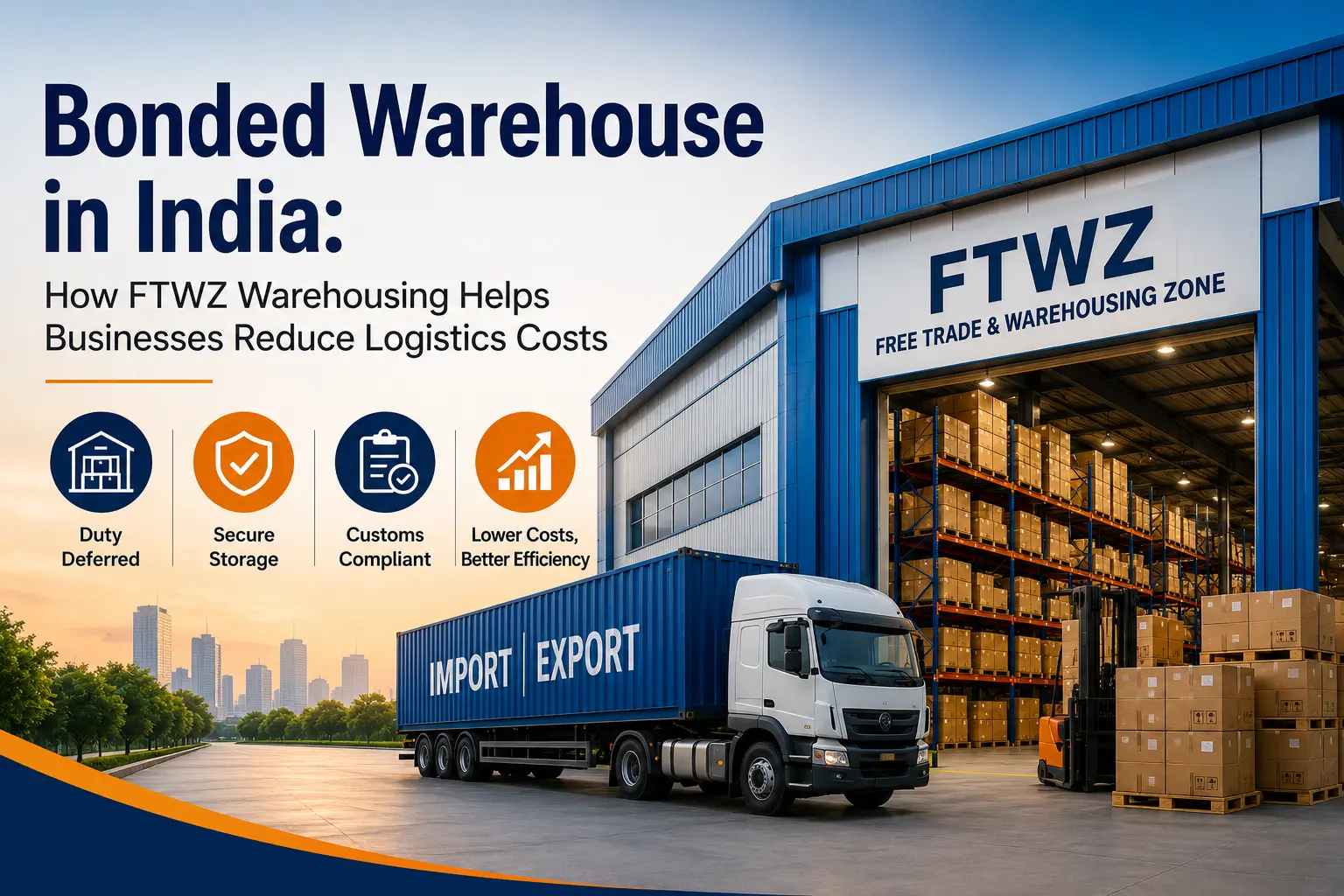
- Warehousing (FTWZ)
- Port coordination
- Air and sea freight
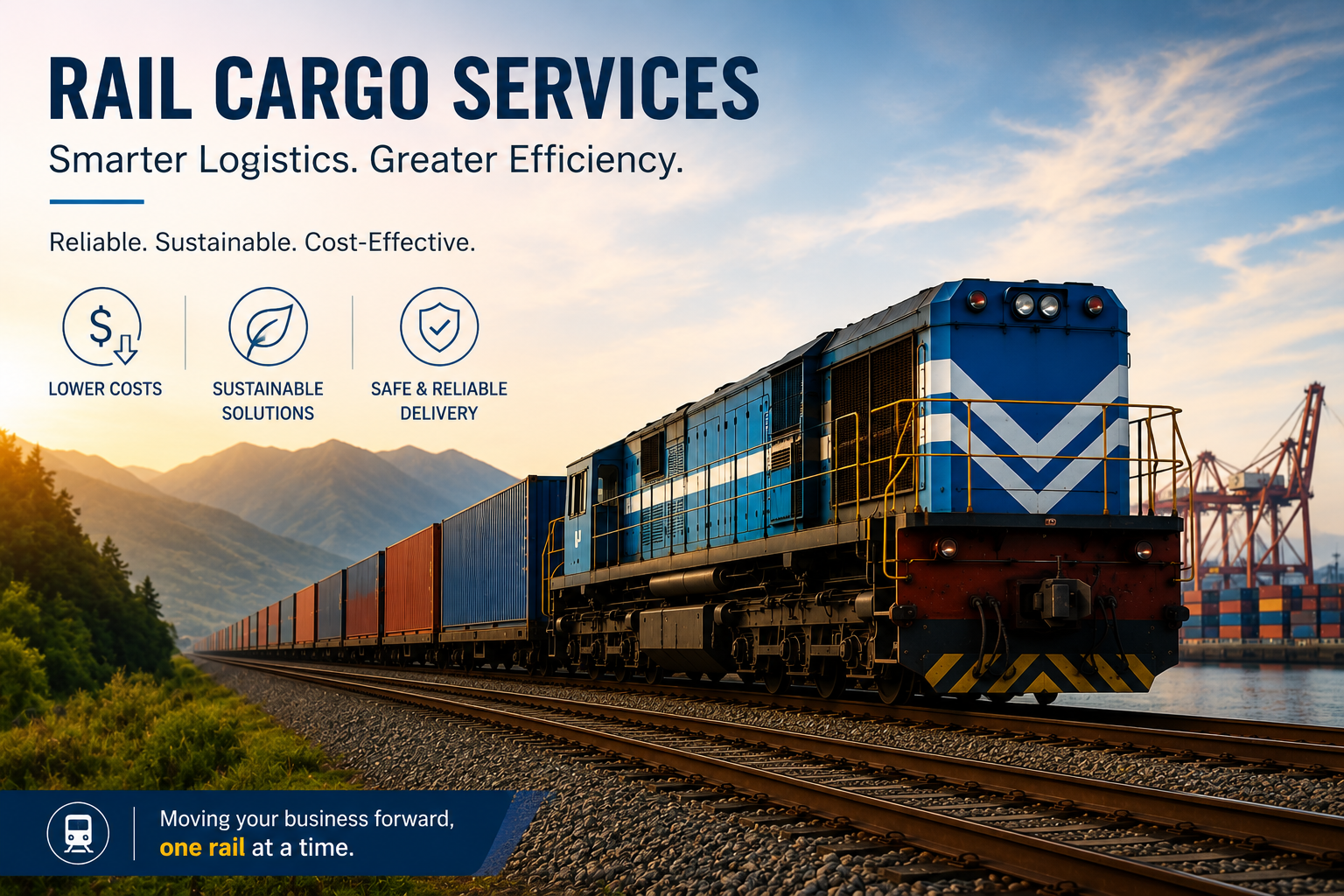
- Rail transportation
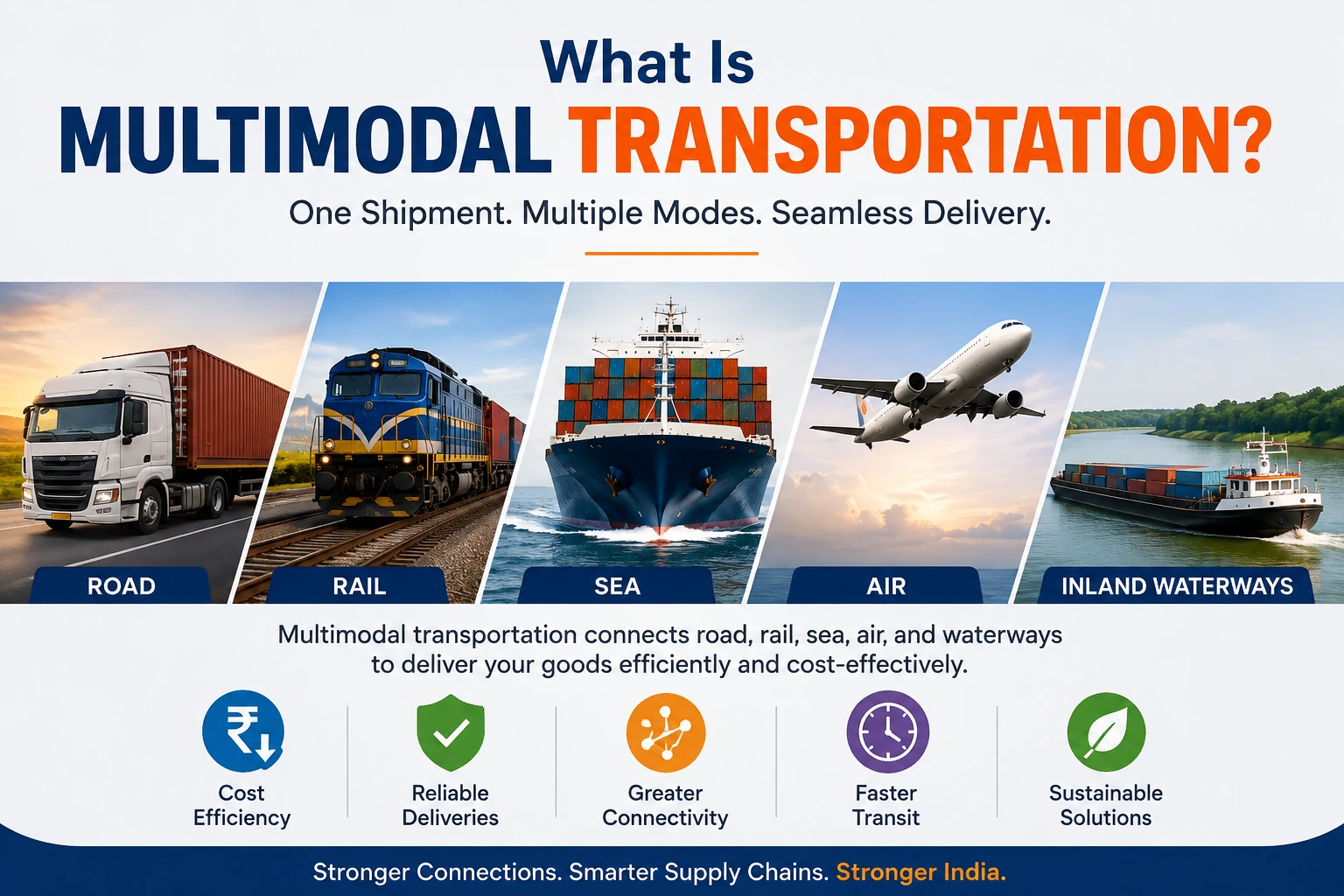
- Multimodal transportation
- Shipment tracking
- Supply chain coordination
- Final-mile delivery
The objective is simple: move goods efficiently from origin to destination while keeping the different logistics activities coordinated.
For businesses involved in international trade, this integrated approach can make complex shipments easier to manage see how it compares against working with multiple separate providers later in this guide.
Why Should Importers and Exporters Choose an End-to-End Logistics Partner?
International shipments involve several parties and processes. A delay in documentation can affect customs clearance, while a delay at the port can affect transportation schedules and inventory availability.
An experienced Import Export Logistics Partner can coordinate these activities and provide a single point of communication.
Key benefits include:
- Better shipment coordination
- Reduced communication gaps
- Improved documentation management
- Greater visibility across shipments
- Better control over transportation
- Easier customs coordination
- Flexible transportation options
- Improved supply chain planning
- Potential reduction in avoidable logistics costs
For growing businesses, End-to-End Logistics Solutions in India can also make it easier to scale import and export operations without creating a complicated network of separate vendors. A 3PL logistics model is one common way businesses achieve this.
What Services Should You Expect From an End-to-End Logistics Partner?
Not every logistics provider offers the same capabilities. Before choosing a partner, businesses should understand exactly which services are available.
1. Freight Forwarding
Freight forwarding is a critical part of international cargo movement.
A reliable Freight Forwarding Company in India should be able to coordinate shipments based on cargo type, destination, urgency, volume, and transportation requirements.
Freight forwarding may involve:
- Sea freight
- Air freight
- Road transportation
- Rail freight
- FCL and LCL shipments
- Cargo consolidation
- Shipment documentation
- Freight coordination
- Cargo tracking
The right transportation mode depends on factors such as delivery timelines, cargo characteristics, destination, and budget. See the full freight forwarding process, step by step for a closer look at how a shipment moves from booking to delivery.
2. Customs Clearance
Customs is one of the most important parts of import and export logistics.
Professional Customs Clearance Services in India can help businesses manage documentation, customs procedures, duty-related processes, cargo examination coordination, and regulatory requirements.
A capable Customs Clearance Company in India should understand the requirements applicable to the shipment and coordinate with relevant stakeholders to reduce unnecessary delays. For a detailed walkthrough, see this step-by-step export clearance process guide.
Businesses should ask potential logistics partners whether they can manage customs requirements as part of the overall shipment instead of treating clearance as a completely separate activity.
3. EXIM Logistics
Businesses engaged in international trade require specialized logistics coordination.
An EXIM Logistics Company in India can support import and export operations by coordinating documentation, freight, customs, port activities, transportation, and other shipment requirements.
EXIM Logistics Services in India may include:
- Import documentation
- Export documentation
- Cargo consolidation
- Port coordination
- International freight
- Customs clearance
- Inland transportation
- Shipment tracking
An integrated EXIM approach can be particularly useful for businesses managing frequent international shipments. Read the complete EXIM logistics guide for a deeper breakdown of import-export workflows.
4. International Shipping
International cargo movement requires careful coordination between origin and destination points.
An International Logistics Company in India should have the capability to coordinate shipments across global trade routes and work with relevant logistics and shipping partners.
Businesses should evaluate whether the provider can support:
- International sea freight
- Air freight forwarding
- Containerized cargo
- Consolidated shipments
- Port-to-port transportation
- Door-to-door movement
- Import and export documentation
- Cargo tracking
An International Shipping Company in India should also provide clarity about the shipment process, responsibilities, expected timelines, and charges before cargo is dispatched.
5. Multimodal Transportation
Some shipments require more than one transportation method.
For example, cargo may move by sea from an international origin to an Indian port, followed by rail or road transportation to an inland destination.
Multimodal Logistics Services in India combine different transportation modes to create a suitable route for the shipment.
Depending on the cargo, businesses may use combinations of:
Sea → Road
Sea → Rail → Road
Air → Road
Rail → Road
A logistics partner with multimodal capabilities can provide greater flexibility when businesses need to balance cost, transit time, cargo requirements, and destination connectivity. Bismarck World’s dedicated rail division supports cost-effective inland movement as part of this mix.
6. Warehousing and Distribution
Warehousing can become an important part of international supply chains, especially when businesses need to store imported goods before distribution or consolidate cargo before re-export.
A provider offering Integrated Logistics Services in India may combine transportation with warehousing, inventory coordination, and distribution.
For businesses with international supply chains, this can help connect:
Import → Customs → Warehousing → Transportation → Distribution
Bismarck World, for example, offers an FTWZ division that supports storage, cargo consolidation, inventory management, and integrated logistics for international trade operations including duty deferment and long-term storage benefits for importers.
How to Choose the Right End-to-End Logistics Company in India
Selecting a logistics partner should not be based only on price. Businesses should evaluate capabilities, reliability, technology, compliance knowledge, communication, and scalability.
1. Evaluate Their Service Portfolio
First, identify whether the provider can handle the services your business actually requires.
A strong Complete Logistics Solutions in India provider may offer:
- Freight forwarding
- Customs clearance
- EXIM logistics
- Cargo transportation
- Warehousing (FTWZ)
- Multimodal transportation
- Supply chain management
- Documentation support
The more services that can be coordinated under one partner, the easier it can be to manage complex shipments. If your requirements sit outside a standard package, a logistics consultancy service can help design a custom solution.
2. Check Import and Export Expertise
International logistics requires knowledge of shipping documentation, customs procedures, transportation processes, and regulatory requirements.
Ask the logistics provider:
- How many years have they handled EXIM shipments?
- Which industries do they serve?
- Which ports and airports do they operate through?
- Can they handle both imports and exports?
- Do they provide customs clearance?
- Can they coordinate inland transportation?
A provider experienced in your specific cargo category can be particularly valuable. Comparing shortlisted providers side by side, as outlined in this guide on how to compare import-export logistics companies, can make this step easier.
3. Assess Their Freight Network
A Global Logistics Company in India should have access to reliable transportation and logistics networks.
Look for capabilities across:
- Major Indian ports
- Airports
- Rail networks
- Road transportation
- International shipping routes
- Warehousing locations
A broader network can provide more options when a particular route faces capacity, timing, or cost constraints.
4. Ask About Shipment Visibility
Shipment visibility is increasingly important for supply chain management.
Before selecting a provider, understand how shipment information is communicated.
Ask whether you receive:
- Shipment status updates
- Tracking information
- Estimated arrival updates
- Exception notifications
- Delivery confirmation
- Documentation updates
Better visibility helps businesses plan inventory, production, warehouse capacity, and customer deliveries.
5. Examine Customs and Compliance Capabilities
Choosing a logistics provider without evaluating its compliance capabilities can create unnecessary risk.
The provider should have processes for documentation, customs coordination, cargo classification, duties, and other applicable regulatory requirements.
This is particularly important for businesses handling products that require additional certifications, approvals, or regulatory documentation.
Bismarck World’s customs broking service includes documentation preparation, Bills of Entry, Shipping Bills, HS code classification, duty calculations, cargo inspection coordination, and compliance support — read the full customs broking guide for more detail.
End-to-End Logistics vs Using Multiple Logistics Providers
Businesses can either coordinate several specialized providers or work with an integrated logistics company.
| Factor | Multiple Providers | End-to-End Logistics Partner |
| Communication | Multiple contacts | Centralized communication |
| Shipment coordination | Requires internal management | Coordinated by logistics partner |
| Customs | Separate provider may be needed | Can be integrated |
| Freight | Separate coordination | Integrated |
| Transportation | Multiple vendors | Coordinated transportation |
| Visibility | Can be fragmented | More centralized |
| Supply chain management | More internal coordination | More streamlined |
For businesses with regular import and export operations, an integrated approach can simplify logistics management.
When Should You Consider 3PL Logistics Services?
A business may consider 3PL Logistics Services in India when it wants an external logistics provider to manage selected or multiple supply chain activities.
3PL services can include:
- Transportation
- Warehousing
- Distribution
- Freight forwarding
- Inventory coordination
- Order fulfilment
- Shipment management
The right model depends on the company’s shipment volume, geographical coverage, internal logistics capabilities, and growth plans.
For businesses expanding their import-export operations, an integrated 3PL provider can reduce the need to build and manage every logistics function internally.
Why Cargo Transportation Matters in End-to-End Logistics
International freight does not end when cargo reaches an Indian port.
Goods may still need to travel from the port to a warehouse, factory, distribution centre, or customer.
A reliable provider of Cargo Transportation Services in India should therefore be able to coordinate inland movement after customs clearance.
This can involve:
- Road transportation
- Rail transportation
- Container movement
- Warehouse transfers
- Port pickup
- Final delivery
Coordinating inland transportation with international freight can reduce handover-related delays and improve shipment continuity.
What Should Businesses Ask Before Hiring a Logistics Partner?
Before selecting a Logistics Management Company in India, ask these questions:
Can you manage the complete shipment?
Understand which activities are included and which will be outsourced.
Do you handle both imports and exports?
This matters if your business operates in both directions.
Which transportation modes do you support?
Ask about air, sea, road, rail, and multimodal options.
Do you provide customs clearance?
Clarify whether customs is managed internally or through another provider.
Can you provide door-to-door transportation?
Door-to-Door Logistics Services India can simplify shipment coordination by connecting origin pickup with final delivery.
How do you handle shipment delays?
Ask about escalation procedures and communication during exceptions.
How are logistics charges calculated?
Request a transparent quotation covering freight, documentation, customs-related charges, transportation, handling, warehousing, and other applicable costs.
Can you scale with our business?
Your logistics partner should be capable of handling increased shipment volumes, new destinations, and changing supply chain requirements.
Why Bismarck World Can Be Considered for End-to-End Logistics
Bismarck World provides integrated logistics services covering freight forwarding, customs clearance, EXIM logistics, cargo transportation, and multimodal transportation. Its offering also spans rail, FTWZ warehousing, EXIM transport, customs broking, freight forwarding, and consultancy divisions.
Its freight forwarding capabilities include air, sea, road, and rail transportation, along with cargo booking, documentation, consolidation, shipment coordination, and tracking.
For businesses looking for Business Logistics Solutions India, this integrated model can help bring different logistics requirements under a coordinated framework rather than managing every function independently. You can learn more about Bismarck World’s history and operations, or get in touch to discuss a shipment.
Final Thoughts
Choosing the right End-to-End Logistics Company in India is an important business decision for importers, exporters, manufacturers, and companies involved in international trade.
The right logistics partner should offer more than transportation. It should understand freight forwarding, customs, EXIM operations, cargo transportation, warehousing, compliance, and supply chain coordination.
When comparing providers, evaluate their experience, service coverage, network, technology, communication, compliance capabilities, pricing transparency, and ability to scale.
For businesses that require regular international cargo movement, an Integrated Logistics Company in India can simplify operations by bringing multiple logistics functions together.
Ultimately, the best Import Export Logistics Company in India is one that can understand your supply chain requirements, provide dependable execution, communicate clearly, and build a logistics solution around your business not simply around an individual shipment. Explore Bismarck World’s full range of services or connect with the team to discuss your requirements.
Frequently Asked Questions
1. What is an end-to-end logistics company?
An end-to-end logistics company manages multiple stages of cargo movement under one coordinated service structure, which can include freight forwarding, customs clearance, transportation, warehousing, shipment tracking, and final delivery.
2. Why should importers use an end-to-end logistics partner?
An end-to-end partner can simplify coordination between freight, customs, transportation, documentation, and other logistics activities while providing businesses with a central point of contact.
3. What services should an import-export logistics company provide?
A capable Import Export Logistics Company in India may provide freight forwarding, customs clearance, EXIM documentation, cargo transportation, warehousing, multimodal logistics, shipment tracking, and supply chain coordination.
4. What is EXIM logistics?
EXIM logistics refers to the logistics activities involved in export and import operations. It can include documentation, freight forwarding, customs clearance, port coordination, cargo transportation, warehousing, and international shipment management. See the full EXIM logistics guide for more.
5. What are multimodal logistics services?
Multimodal Logistics Services in India use two or more transportation modes such as sea, road, rail, or air to move cargo efficiently between origin and destination.
6. How do I choose an international logistics company in India?
Evaluate the company’s freight network, EXIM experience, customs capabilities, transportation options, shipment visibility, technology, communication, pricing transparency, and ability to manage your cargo requirements.
7. What is the difference between freight forwarding and end-to-end logistics?
Freight forwarding primarily focuses on coordinating cargo transportation and related shipping activities. End-to-end logistics can cover a broader range of services, including freight, customs, warehousing, inland transportation, and supply chain coordination.
8. What are 3PL logistics services?
3PL Logistics Services in India involve outsourcing selected or multiple logistics activities to an external provider. These may include transportation, warehousing, distribution, inventory management, and shipment coordination.
9. Can a logistics company handle customs clearance and transportation together?
Yes. Many integrated logistics providers combine customs clearance with freight forwarding and inland transportation, allowing businesses to coordinate multiple shipment stages through one partner.
10. Why is shipment tracking important?
Shipment tracking provides visibility into cargo movement and helps businesses monitor progress, identify delays, plan inventory, and coordinate receiving or delivery activities.
11. What are door-to-door logistics services?
Door-to-Door Logistics Services India connects cargo pickup at the origin with delivery at the final destination, with the logistics provider coordinating the transportation stages involved.
12. How can an integrated logistics company help businesses?
An Integrated Logistics Company in India can coordinate multiple logistics functions, reduce communication gaps, improve shipment visibility, and provide a more streamlined approach to managing international supply