Mumbai is India’s trade gateway. Whether you are an importer receiving machinery or an exporter shipping pharmaceuticals, understanding customs clearance in Mumbai is the most critical step in your supply chain. From Nhava Sheva (JNPT) to Mumbai International Airport, thousands of shipments go through the customs clearance process every single day. A single documentation error or missed step can trigger expensive delays, demurrage charges, and compliance penalties — costing businesses significantly more than the duty itself.
At Bismarck World — an IATA-certified, MTO-registered logistics company in Mumbai with 10+ years of EXIM operations experience, we have handled customs clearance for 200+ importers and exporters across India. Our licensed CHA team manages the end-to-end customs clearance process at JNPT, Mumbai Port, and Mumbai Airport daily. In this guide, we share exactly what we do for our clients: the complete step-by-step customs clearance process in Mumbai, required documents, charges, timelines, and how to avoid the most common and costly delays in 2026.
What Is Customs Clearance in Mumbai?
Customs clearance in Mumbai is the formal regulatory process by which goods entering or leaving India are assessed, documented, inspected, and approved by Indian Customs under the Central Board of Indirect Taxes and Customs (CBIC). Every consignment — whether a 20-foot sea freight container or a time-sensitive air cargo shipment — must complete this process before it can legally enter or exit Indian territory.
In Mumbai, customs clearance takes place at three primary locations:
- Nhava Sheva (JNPT) — India’s largest container port, handling over 50% of the country’s containerised sea freight
- Mumbai Port Trust — for break-bulk, general cargo, project cargo, and liquid bulk shipments
- Chhatrapati Shivaji Maharaj International Airport — for air cargo customs clearance at Mumbai Airport
All filings, duty payments, and examination orders are processed through ICEGATE — India’s national Electronic Data Interchange (EDI) customs clearance system operated by the CBIC. To understand the broader cargo movement picture, read our article on Transport Services in Mumbai: Types, Costs & Providers.
Step-by-Step Import Clearance Procedure at Mumbai Port
Based on Bismarck World’s day-to-day customs clearance operations at JNPT and Mumbai Port updated for 2026.
The import clearance procedure at Mumbai port follows a strict 7-step sequence on the ICEGATE system. Our Custom Clearing Service in Mumbai blog explains the nuances for different cargo types, but here is the complete step-by-step breakdown every importer needs to know:
Step 1 — IGM Filing The shipping line or airline files an Import General Manifest (IGM) on ICEGATE before or upon vessel/flight arrival at JNPT or Mumbai Port. This is the carrier’s official declaration of all cargo aboard.
Step 2 — Bill of Entry Filing Your licensed CHA files the Bill of Entry on ICEGATE — the core import declaration document containing the HS code, cargo description, CIF value, and applicable duty details. Filing accuracy at this stage is critical because errors trigger examination orders. See our Customs Broking Services in Mumbai guide for a detailed walkthrough of what goes into a correctly filed Bill of Entry.
Step 3 — Risk Assessment (RMS) ICEGATE’s Risk Management System (RMS) automatically evaluates the shipment based on declared value, HS code, importer profile, and cargo history. The shipment is then tagged as Green Channel (auto-release), Yellow Channel (document check), or Red/Blue Channel (physical examination).
Step 4 — Duty Calculation Customs duty is calculated based on HS code, CIF value, Basic Customs Duty (BCD), IGST, Social Welfare Surcharge, and any applicable exemption notifications. This is the Mumbai customs duty process 2026 — and getting the HS code right is the single most important factor in accurate duty assessment. Refer to the CBIC customs duty lookup for current duty rates by HS code.
Step 5 — Duty Payment The importer pays all applicable duties through the ICEGATE payment gateway. Payment confirmation triggers the examination order for Yellow/Red/Blue channel shipments.
Step 6 — Customs Examination For Red and Blue channel shipments, a customs officer at JNPT or Mumbai Port conducts a physical inspection of the cargo to verify the accuracy of the Bill of Entry declaration — quantity, description, value, and condition. This is the customs examination process India follows under Section 17 of the Customs Act.
Step 7 — Out-of-Charge (OOC) Once duties are paid and examination (if any) is completed satisfactorily, customs issues the Out-of-Charge (OOC) order — the green light to release goods from the port. Inland movement is then arranged via our Rail Division or EXIM Transport Services.
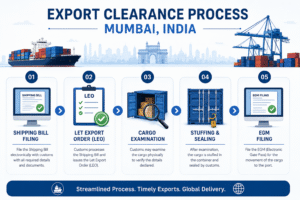
Export Clearance Process Mumbai India
For exporters, the shipping bill process export India also flows through ICEGATE. Our guide on the Freight Forwarding Process Explained covers how freight forwarding integrates with export clearance from booking to final departure.
- Shipping Bill Filing: Your CHA files the Shipping Bill on ICEGATE — the primary export declaration document. For export license requirements, refer to DGFT.
- Let Export Order (LEO): Customs verifies the Shipping Bill and issues LEO, authorising cargo to be handed over to the carrier.
- Cargo Examination: Risk-based physical examination for selected export shipments.
- Stuffing & Sealing: Cargo is loaded into containers and sealed under customs supervision at the Container Freight Station (CFS) or factory.
- EGM Filing: The shipping line files the Export General Manifest (EGM) confirming that goods have physically departed India — this is critical for Drawback and IGST refund processing.
Exporters deciding between container modes should read our practical guide on FCL vs LCL Shipping in India. For time-sensitive consignments, our Air Freight Forwarding Services from Mumbai offer expedited customs processing at Mumbai Airport with transit times starting from 12 hours.
Documents Required for Customs Clearance in Mumbai
Getting your documentation right is the single biggest factor in how fast your customs clearance in Mumbai goes through. Incomplete, mismatched, or inaccurate documents are the number one cause of Red Channel assignments and customs holds at JNPT. Our Customs Broking service page has the complete compliance checklist for every cargo type — here is the master list:
For Import Clearance:
- Bill of Lading (Sea) or Airway Bill (Air)
- Commercial Invoice and Packing List
- Bill of Entry (filed on ICEGATE by your CHA)
- Importer Exporter Code (IEC) — issued by DGFT
- Certificate of Origin (CoO)
- Insurance Certificate
- Test Reports / FSSAI / BIS Approvals (mandatory for food, electronics, and regulated products)
- MSDS — Material Safety Data Sheet (for hazardous or chemical goods)
- GST Registration / GSTIN (required for ITC claims on IGST paid at customs)
For Export Clearance:
- Shipping Bill (filed on ICEGATE by your CHA)
- Commercial Invoice and Packing List
- Export License (if applicable under DGFT regulations)
- ARE-1 Form (for excisable goods)
- Letter of Credit (if payment terms are via LC)
- Certificate of Origin (for preferential duty treatment under trade agreements)
- GST Invoice with GSTIN
Additional NOCs or product-specific approvals may apply for pharmaceuticals, chemicals, food products, textiles, or electronics. Our EXIM Transport Services team advises importers and exporters on category-specific documentation requirements before shipment departure.
How Long Does Customs Clearance Take in Mumbai India?
One of the most common questions we receive at Bismarck World is: how long does customs clearance take in Mumbai? The answer depends entirely on the ICEGATE RMS channel assigned to your shipment:
| Channel | Action Required | Typical Timeline |
| Green Channel | No examination — auto release | 4–8 hours |
| Yellow Channel | Document verification only | 1–2 working days |
| Red Channel | Physical examination of cargo | 2–5 working days |
| Blue Channel | Post-clearance audit (AEO firms) | Same day release |
The Blue Channel is available exclusively to Authorised Economic Operator (AEO) certified companies, which enjoy same-day clearance as a key benefit of the programme. If your business ships regularly through Mumbai, AEO certification is one of the most valuable investments you can make to speed up customs clearance in India.
Role of a CHA (Custom House Agent) in Mumbai
The CHA (Custom House Agent) Mumbai role is arguably the most important professional relationship in your import-export operation. A licensed CHA is the only authorised intermediary permitted by the CBIC to file customs documents on behalf of importers and exporters under the Customs Brokers Licensing Regulations (CBLR).
At Bismarck World, our Customs Broking team has managed thousands of import and export consignments at JNPT, Mumbai Port, and Mumbai Airport. Here is what our customs brokers do for every shipment:
- File Bills of Entry and Shipping Bills on ICEGATE accurately and on time
- Classify goods under the correct HS code to ensure accurate duty calculation
- Prepare and verify the full customs documentation checklist before filing
- Represent the importer or exporter during customs examination at the port
- Manage port clearance procedure at Nhava Sheva (JNPT) from filing to OOC
- Coordinate with shipping lines, port terminals, and Customs Preventive Officers
- Process duty drawback applications and IGST refunds for exporters
- Flag and resolve examination queries and customs notices proactively
Want to understand how freight forwarding and customs broking work together end-to-end? Read our guide on Freight Forwarding Service in Mumbai: Costs, Process & Top Providers.
Customs Clearance Charges in Mumbai India
Customs clearance charges in Mumbai India are made up of several components — government-levied duties and professional service fees. Here is a complete breakdown:
- Basic Customs Duty (BCD): 0% to 40% depending on HS code classification
- IGST on Imports: 5%, 12%, 18%, or 28% depending on product category
- Social Welfare Surcharge (SWS): 10% levied on the Basic Customs Duty
- CHA / Customs Broker Professional Fees: INR 5,000–25,000 per shipment depending on complexity
- Port / Terminal Handling Charges: Levied by JNPT, Mumbai Port Trust, or airport cargo authorities
- Container Freight Station (CFS) Charges: Storage and handling at CFS before customs release
- Demurrage & Detention: Charged by shipping lines if containers are not cleared within the free period
GST-registered importers can claim full Input Tax Credit (ITC) on the IGST paid at customs, significantly reducing the effective import cost for businesses in the supply chain. The Union Budget 2026 trade policy changes also introduced revised duty structures on several commodity categories — always review current rates with your CHA before each import shipment.
Customs Clearance for Specific Cargo Types in Mumbai
Different cargo categories require additional compliance steps beyond the standard customs clearance process. Based on our operational experience at Bismarck World, here is what importers and exporters need to know for regulated cargo:
Pharmaceuticals & Medical Devices Require CDSCO (Central Drugs Standard Control Organisation) import license, test reports, and shelf-life declarations. Allow an additional 3–5 days for regulatory approvals.
Food & Agricultural Products Require FSSAI import clearance, phytosanitary certificates, and fumigation certificates. Cold chain products need pre-approved temperature-controlled storage at JNPT.
Electronics & Electrical Goods Require BIS (Bureau of Indian Standards) certification for many categories. Non-compliant products can be detained at customs and returned at the importer’s expense.
Chemicals & Hazardous Materials Require MSDS, Hazardous Material Declaration, and in many cases prior NOC from the Ministry of Environment. Our EXIM Transport Services team handles DG cargo documentation.
How to check customs clearance status on ICEGATE: Log in to www.icegate.gov.in → use your Bill of Entry number or IGM number → check the status under “Enquiry Services.” Your CHA can also provide real-time status updates directly.
Common Delays in Customs Clearance Mumbai & How to Fix Them
| Delay Reason | How to Prevent It |
| Incorrect HS Code classification | Work with a licensed CHA — wrong codes trigger examinations and duty disputes |
| Incomplete or mismatched documents | Use the full customs documentation checklist before shipment departure |
| Physical examination (Red Channel) | Accurate declaration of quantity, value, and description is the only prevention |
| Pending duty payments | Pre-arrange duty funding — have funds ready before vessel arrives at JNPT |
| Third-party agency delays (FSSAI, BIS, CDSCO) | Apply for NOCs and licenses 30+ days before expected shipment arrival |
| Wrong IEC or GST details on Bill of Entry | Verify IEC, GSTIN, and ICEGATE registration details before every shipment |
| Demurrage from late clearance | Appoint your CHA and share documents before vessel arrival, not after |
For a broader perspective on supply chain disruption management, read Top Logistics Challenges in International Trade and How to Solve Them.
Port Clearance at Nhava Sheva (JNPT) vs Mumbai Airport
Nhava Sheva (JNPT) is India’s largest and busiest container terminal, handling over 50% of India’s containerised sea trade. The port clearance procedure at Nhava Sheva is fully EDI-based, integrated with ICEGATE, and supported by multiple Container Freight Stations and an Inland Container Depot network. Bismarck World’s Freight Forwarding Services cover both FCL and LCL shipments at JNPT — if you are deciding between FCL and LCL, our guide on FCL vs LCL Shipping in India will help you choose the right mode for your cargo.
Mumbai International Airport handles time-sensitive, high-value, and perishable cargo. Air cargo customs clearance at Mumbai Airport is processed through the Air Cargo Complex (ACC) on ICEGATE and typically completes within 12–24 hours for Green and Yellow channel shipments. Our Air Freight Forwarding Services from Mumbai are built for businesses that cannot afford sea freight transit times.
After customs clearance at JNPT, inland cargo moves via road or rail. Bismarck World’s Rail Division connects JNPT to major industrial hubs across India — read our detailed guide on Rail Logistics Services: Benefits, Process & Use Cases.
FTWZ: A Smarter Alternative to Standard Customs Clearance
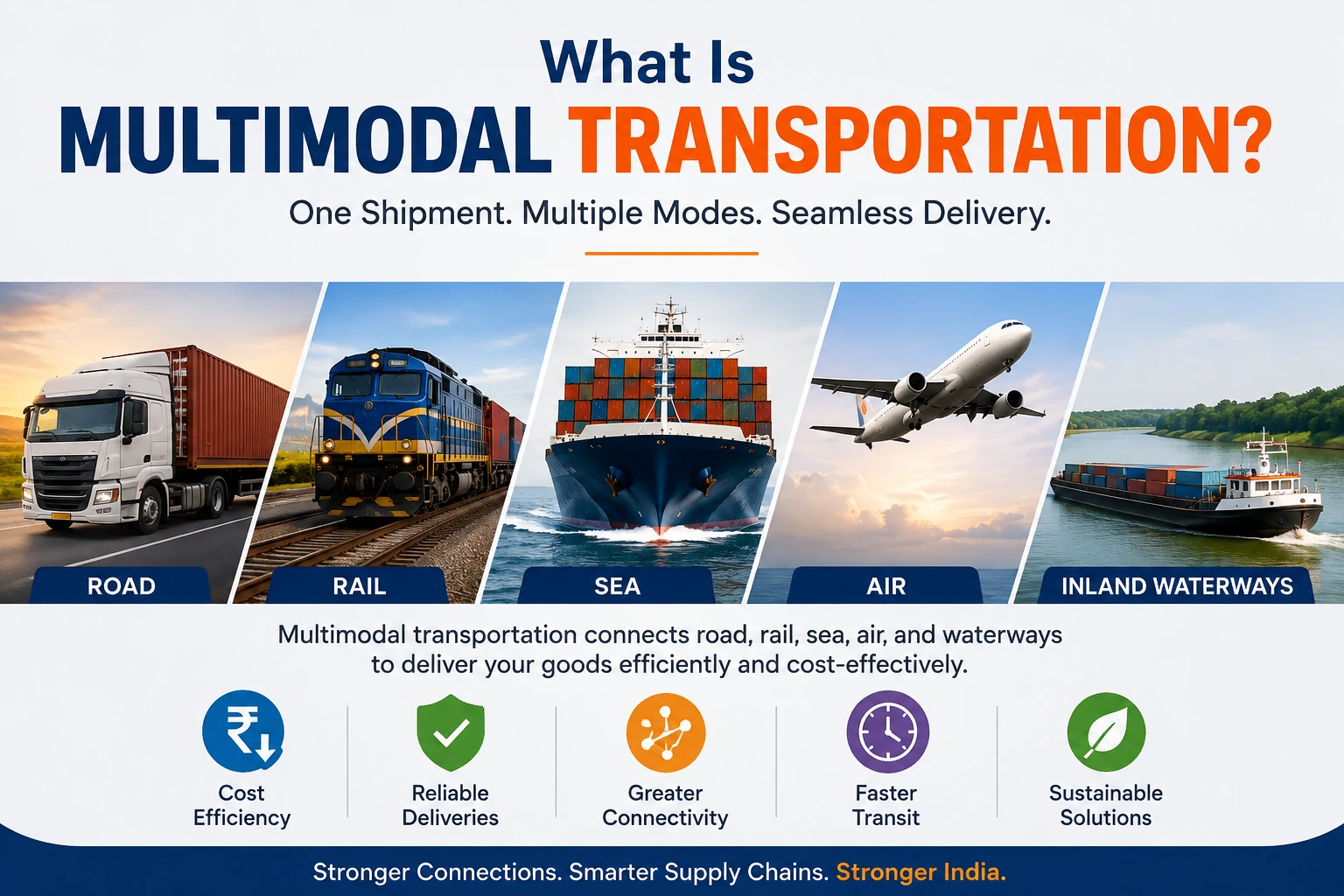
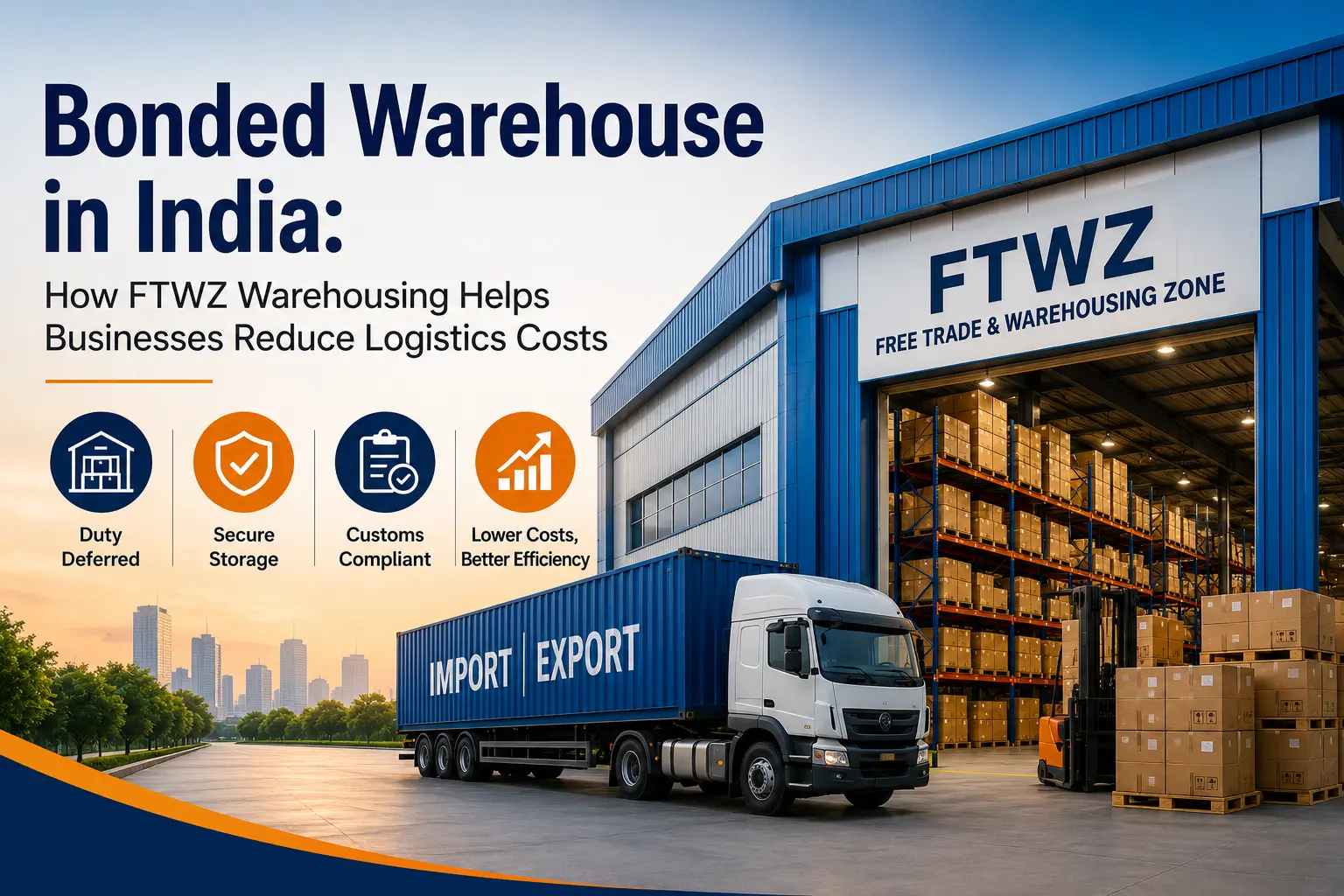
If your business imports large volumes regularly, the standard customs clearance process in Mumbai may not be your most cost-effective option. Bismarck World’s FTWZ Division at JNPT offers a smarter alternative through Free Trade Warehousing Zone facilities.
With FTWZ, you defer customs duty payment until goods actually leave the zone for domestic consumption — not at the time of import. This frees up working capital, allows re-export without duty payment, and provides long-term bonded storage with full customs compliance.
- Top Benefits of FTWZ Services Mumbai for Importers & Exporters
- FTWZ vs Regular Warehousing: Why Your Business Needs a Free Trade Zone
Customs Compliance Rules India 2026 — Key Updates
Staying current with customs compliance rules India 2026 is non-negotiable. The CBIC has rolled out several significant updates this year that directly affect customs clearance in Mumbai:
- Risk-Based Examination: ICEGATE RMS now uses AI-driven cargo profiling for faster Green Channel clearances — compliant importers with clean track records are benefiting from significantly faster release times
- GST Integration: Full ITC on IGST paid at customs for GST-registered businesses — making imports more cost-efficient for supply chain participants
- Faceless Assessment: CBIC’s faceless customs assessment programme removes direct officer-importer interaction, improving transparency and reducing discretionary delays
- AEO Programme Expansion: Authorised Economic Operator certification now provides Blue Channel same-day clearance, priority examination scheduling, and reduced bank guarantee requirements
- SWIFT Single Window Interface: Centralised NOC approvals from FSSAI, DGFT, Plant Quarantine, and other agencies through a single ICEGATE-integrated portal — significantly reducing multi-agency clearance timelines
Staying compliant also means understanding how Supply Chain Management drives economic stability and business growth. For personalised compliance advice tailored to your import-export profile, our Logistics Consultancy team can audit your customs setup and recommend improvements.
Frequently Asked Questions (FAQs)
Q1. What is the step-by-step customs clearance process in Mumbai for importers?
The 7-step process is: IGM filing by the shipping line → Bill of Entry filed by your CHA on ICEGATE → RMS channel assignment (Green/Yellow/Red/Blue) → customs duty calculation → duty payment → physical examination if Red/Blue channel → Out-of-Charge (OOC) order issued. See our complete operational guide at Custom Clearing Service in Mumbai.
Q2. What documents are required for import clearance at Mumbai Port?
The key documents required for customs clearance in Mumbai include: Bill of Lading or Airway Bill, Commercial Invoice, Packing List, Bill of Entry, IEC Code, Certificate of Origin, Insurance Certificate, and applicable product approvals such as FSSAI, BIS, or CDSCO depending on cargo type.
Q3. How long does customs clearance take in Mumbai India in 2026?
Green Channel: 4–8 hours. Yellow Channel (document check): 1–2 working days. Red Channel (physical examination): 2–5 working days. Blue Channel (AEO certified companies): same-day release.
Q4. What is the ICEGATE customs clearance process in India?
ICEGATE is India’s national customs EDI portal operated by the CBIC. It is used to file Bills of Entry and Shipping Bills, pay customs duties, receive RMS channel assignments, track examination status, and receive Out-of-Charge and LEO orders — entirely electronically. Visit www.icegate.gov.in for direct access.
Q5. What are the customs clearance charges in Mumbai India?
Charges include Basic Customs Duty (0–40%), IGST (5–28%), Social Welfare Surcharge (10% on BCD), CHA professional fees (INR 5,000–25,000), port and terminal handling charges, CFS charges, and potential demurrage if free time is exceeded. Contact Bismarck World for a shipment-specific quote.
Q6. What is the role of a CHA (Custom House Agent) in Mumbai?
A licensed CHA is the authorised intermediary under CBIC’s CBLR regulations who files customs documents on ICEGATE, classifies goods under the correct HS code, prepares documentation, represents clients during customs examination, and manages port clearance from filing to OOC. Bismarck World’s Customs Broking team provides licensed CHA services at JNPT, Mumbai Port, and Mumbai Airport.
Q7. What is the customs clearance procedure for beginners in India?
Step one: obtain an IEC (Importer Exporter Code) from DGFT at www.dgft.gov.in. Step two: register for GST. Step three: appoint a licensed CHA. Step four: ensure all shipping documents are accurate and complete before vessel departure. Step five: arrange duty payment funds before vessel arrives. Step six: track shipment status on ICEGATE.
Q8. How does GST impact customs clearance in India?
GST-registered importers pay Integrated GST (IGST) at the time of customs clearance and can claim this as Input Tax Credit (ITC) against their output GST liability — effectively recovering the IGST paid, which dramatically reduces the real cost of customs clearance for supply chain businesses.
Partner with Bismarck World for Seamless Customs Clearance in Mumbai
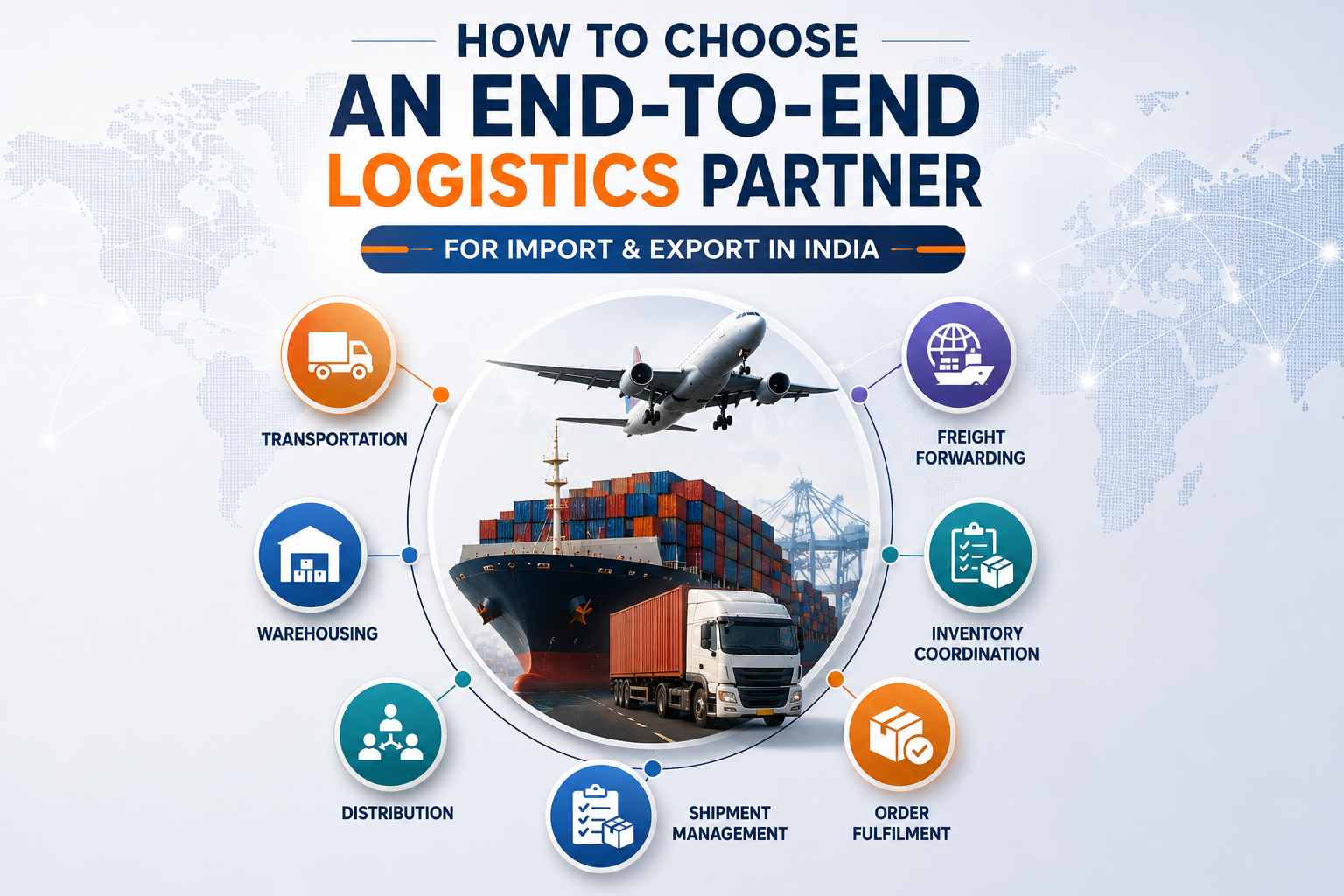
Whether you need customs clearance in Mumbai for a single urgent shipment or want a long-term logistics partner to manage your entire EXIM supply chain, Bismarck World delivers. Our licensed CHA team, multimodal freight network, and FTWZ solutions are built for businesses that cannot afford delays at the port.
With 10+ years of hands-on experience handling customs clearance at JNPT, Mumbai Port, and Mumbai Airport — and a 200+ client base across manufacturing, pharmaceuticals, retail, chemicals, and FMCG — Bismarck World is the trusted name for customs clearance in Mumbai that importers and exporters rely on every day.
- Licensed CHA team at JNPT, Mumbai Port & Mumbai Airport — Customs Broking Services
- Full EXIM logistics solutions — EXIM Transport Services
- Sea, air & multimodal freight forwarding — Freight Forwarding Services
- Duty deferment with FTWZ — FTWZ Division Services
- Rail-based inland cargo movement — Rail Division Services
- Expert supply chain and compliance advice — Logistics Consultancy
Get in touch with Bismarck World → info@bismarckworld.com | +91 98200 87400
- Primary Port: Nhava Sheva (JNPT) / Mumbai Port / Mumbai Airport
- Key System: ICEGATE — India’s EDI customs clearance platform
- Import Document: Bill of Entry | Export Document: Shipping Bill
- Key Professional: Licensed CHA (Custom House Agent)
- Typical Timeline: 1–3 working days with complete documentation
- 2026 Updates: AI-based risk profiling, Faceless Assessment, GST ITC on imports