In today’s rapidly evolving supply chain landscape, businesses are increasingly looking for cost-effective and sustainable transport options. Rail logistics services have emerged as a reliable solution, offering efficient cargo movement over long distances. From raw materials to industrial goods, rail transport logistics ensures timely delivery while reducing operational costs.
In this article, we explore what rail logistics services are, their benefits, key processes, and real-world use cases, helping businesses make informed decisions for their supply chain operations.
What Are Rail Logistics Services?
Rail logistics services refer to the transportation and management of goods using railway networks. These services go beyond just moving cargo from point A to point B — they include freight planning, tracking, scheduling, and integration with broader supply chain operations.
Rail freight services are commonly used in industries like manufacturing, mining, agriculture, and e-commerce due to their ability to handle large volumes of cargo efficiently.
Key components of rail logistics services include:
- Scheduling and routing of trains for cargo transport
- Freight loading and unloading
- Rail freight management and monitoring
- Integration with warehousing and last-mile delivery
- Ensuring compliance with safety and regulatory standards
Benefits of Rail Logistics
Businesses are increasingly adopting rail transport logistics for several reasons:
- Cost Efficiency
Rail freight management is often more economical than road or air transport for heavy and bulk cargo. This helps companies reduce transportation costs significantly. - High Capacity & Bulk Handling
Rail cargo services can handle large volumes of goods at once, making it ideal for industries like coal, steel, and agricultural products. - Reliability & Timely Delivery
Rail supply chain solutions are highly reliable, ensuring predictable delivery schedules even over long distances. - Environmental Sustainability
Rail transport produces fewer carbon emissions compared to trucks or air freight, making it a greener option for eco-conscious businesses. - Integration with Multimodal Transport
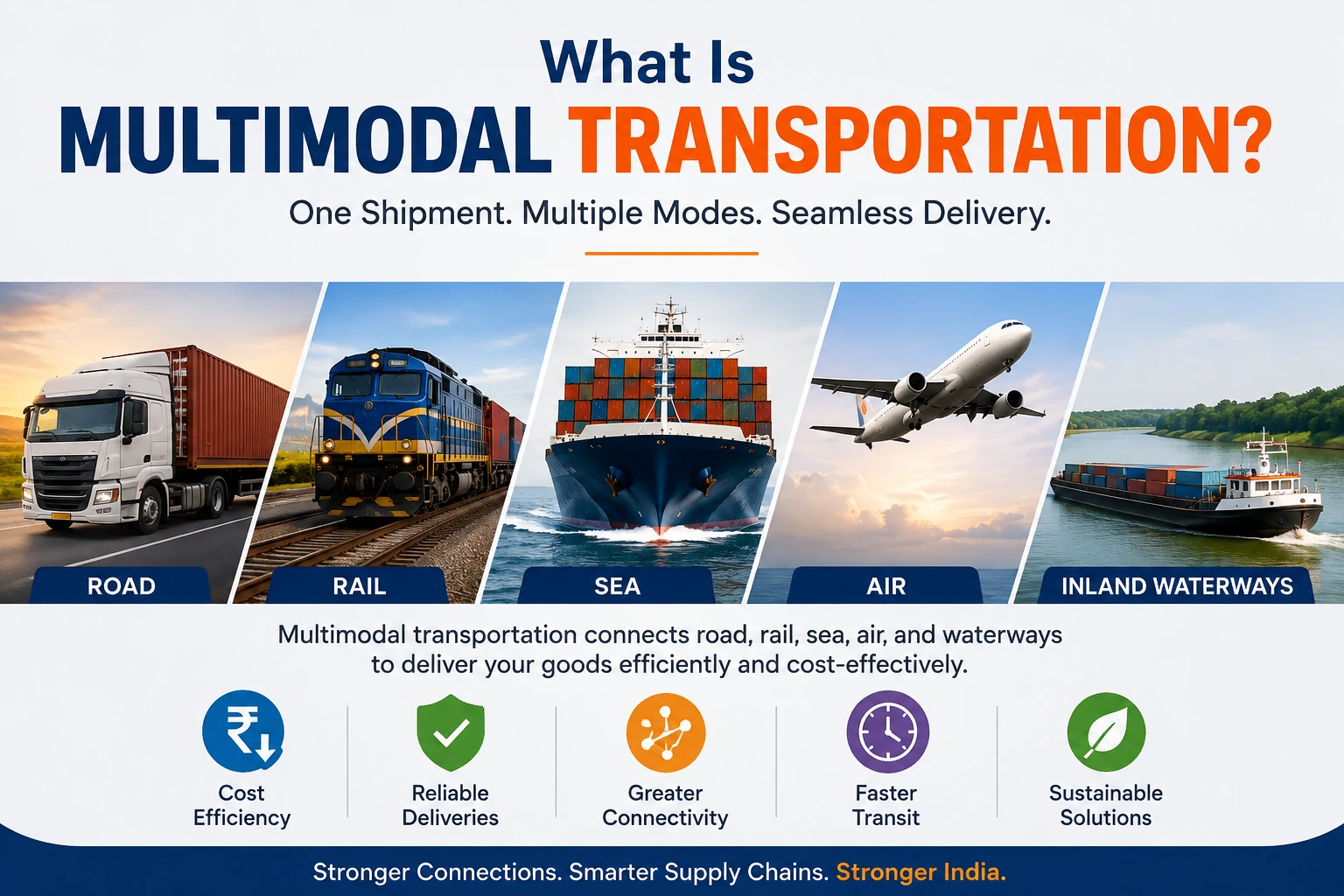
Modern industrial rail logistics seamlessly integrates with road and port transportation, providing end-to-end supply chain solutions.
Rail Logistics Process
Understanding the rail logistics process can help businesses optimize their cargo movement. Here’s a step-by-step overview:
- Cargo Planning & Booking
The process starts with cargo planning, including route selection, scheduling, and booking train slots. - Freight Loading
Goods are loaded into specialized rail wagons based on cargo type and weight. - Rail Transport
The cargo is transported via the railway network, monitored in real-time for efficiency and security. - Unloading & Delivery
At the destination, the cargo is unloaded and either sent directly to warehouses or handed over to last-mile transport providers. - Documentation & Compliance
Rail freight services include proper documentation, regulatory compliance, and insurance for smooth operations.
Use Cases of Rail Logistics Services
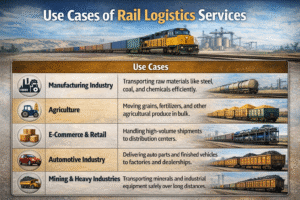
Rail logistics services are versatile and cater to various industries. Some key use cases include:
- Manufacturing Industry: Transporting raw materials like steel, coal, and chemicals efficiently.
- Agriculture: Moving grains, fertilizers, and other agricultural produce in bulk.
- E- commerce & Retail: Handling high-volume shipments to distribution centers.
- Automotive Industry: Delivering auto parts and finished vehicles to factories and dealerships.
- Mining & Heavy Industries: Transporting minerals and industrial equipment safely over long distances.
Why Choose Rail Logistics Services?
- Efficiency: Handles large volumes with fewer trips compared to road transport.
- Cost-effective: Reduces fuel and operational costs for long-haul cargo.
- Sustainable: Environment-friendly with lower emissions.
- Reliable: Ensures timely delivery and fewer transit disruptions.
- Integrated: Works well with multimodal logistics solutions for end-to-end supply chain management.
Conclusion
Rail logistics services are transforming the way businesses manage cargo transportation. With benefits like cost efficiency, reliability, sustainability, and seamless integration with multimodal supply chains, rail freight services are ideal for industries dealing with bulk cargo or long-distance shipments.
Whether you are looking for rail cargo services, industrial rail logistics, or comprehensive rail supply chain solutions, adopting rail logistics can optimize your operations and improve supply chain efficiency.
FAQs
Q1: What is the difference between rail logistics services and rail freight services?
A: Rail logistics services include end-to-end cargo management, planning, and supply chain integration, while rail freight services specifically refer to the transportation of goods via trains.
Q2: How can rail transport logistics benefit my business?
A: Rail transport logistics provides cost savings, bulk handling capacity, timely delivery, and environmentally sustainable transport solutions.
Q3: Which industries commonly use rail cargo services?
A: Manufacturing, mining, agriculture, automotive, and e-commerce industries frequently use rail cargo services due to their high-volume transport needs.
Q4: What is included in the rail logistics process?
A: It includes cargo planning and booking, freight loading, rail transport, unloading and delivery, and documentation & compliance management.
Q5: Can rail logistics integrate with other supply chain modes?
A: Yes, modern rail logistics seamlessly integrates with road and port transportation, offering comprehensive rail supply chain solutions.